
Project Manager at Plum ProExteriors
 03.27.2026
 16 min
 3426
3426
Egress Window Requirements: Size, Codes, and Safety Guide
The evolutionary principle postulates that the human species was originally accustomed to the harsh conditions of the mighty and marvelous outside. As human consciousness evolved, the need for personal safety became increasingly important.
Transitioning towards a settled lifestyle and adopting sustainable/renewable economic practices prompted our ancestors to master the inside. Protecting oneself against marauders is still deeply ingrained in human consciousness and genetic memory. This notion still influences property layout, particularly in the arrangement of sleeping areas. A place to rest epitomizes both comfort and vulnerability. We truly and rightly feel exposed and unguarded when we need the time and the space to decompress and recover.
This is where the concept of egress windows comes into play as a metaphorical shelter: a symbol of calm and a connection with the outside world.
What Are Egress Window Requirements?
Egress window requirements are a set of building codes that establish and justify the minimum dimensions and placement requirements for emergency exits through windows. IRC Code R310 specifies these rules and mandates that such windows be present in all habitable spaces. Their primary function is to ensure the rapid evacuation and access for rescue personnel in the event of an emergency. Egress window requirements vary depending on location, safety codes, and building type.
Egress Window Size Requirements: Minimum Dimensions and Rules
Window egress requirements, when rigorously followed, minimize casualties and manage risks in case of emergencies such as structural failures, anthropogenic and natural disasters.
The essential requirements are as follows:
- minimum clear area – 5.7 square feet;
- height ≥ 24″;
- width ≥ 20″;
- distance from the floor to the window sill ≤ 44″.
Egress window size requirements determine the minimum opening dimensions vital for rescue access and safe exit. These dimensions and conditions allow unimpeded escape through the window in the event of a calamity.
Window egress requirements ensure compliance with modern construction and safety standards. For example, these requirements mean that every bedroom must have its own emergency exit window (this applies to any sleeping area — whether on a ground floor, in a basement, or in an attic).
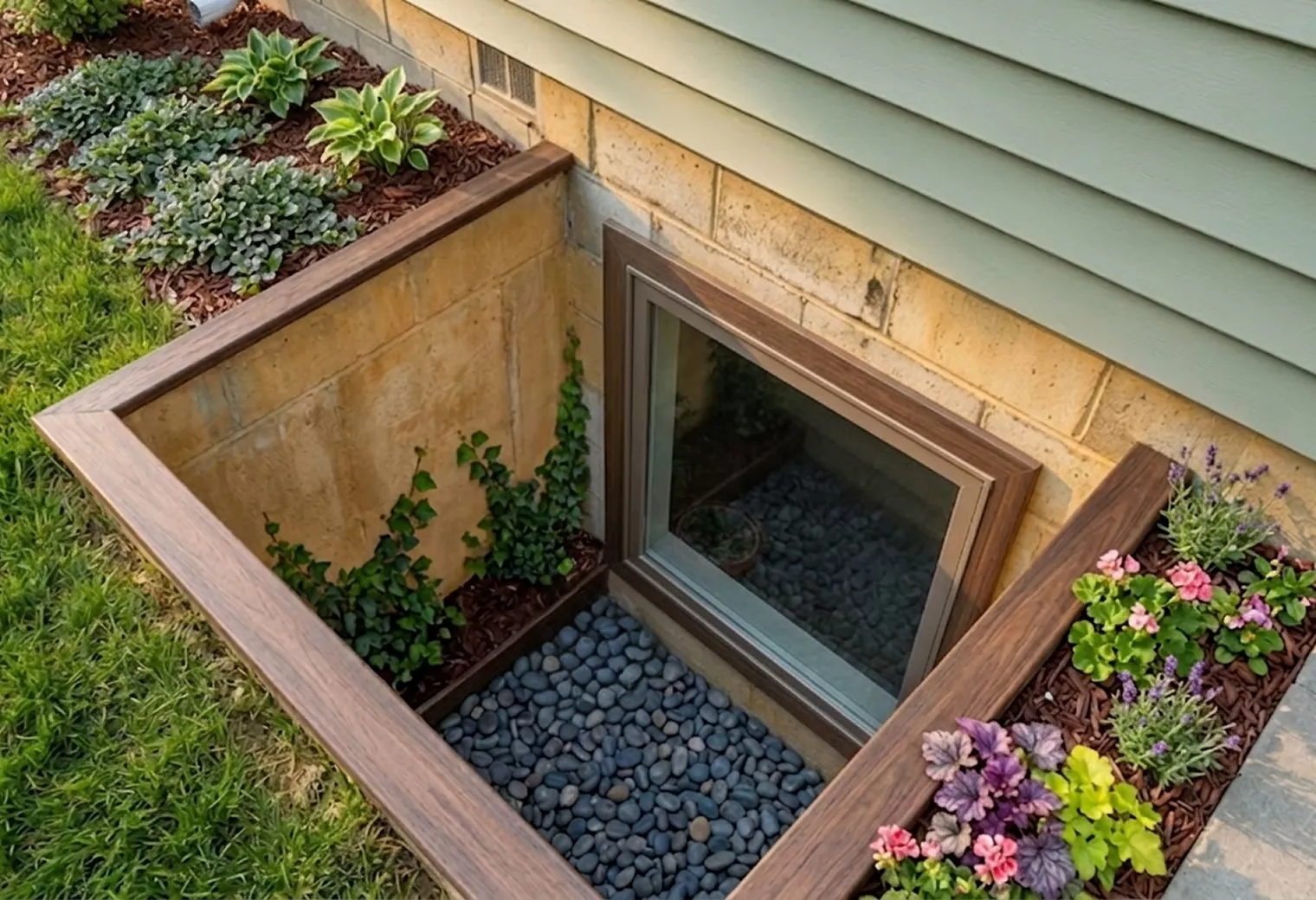
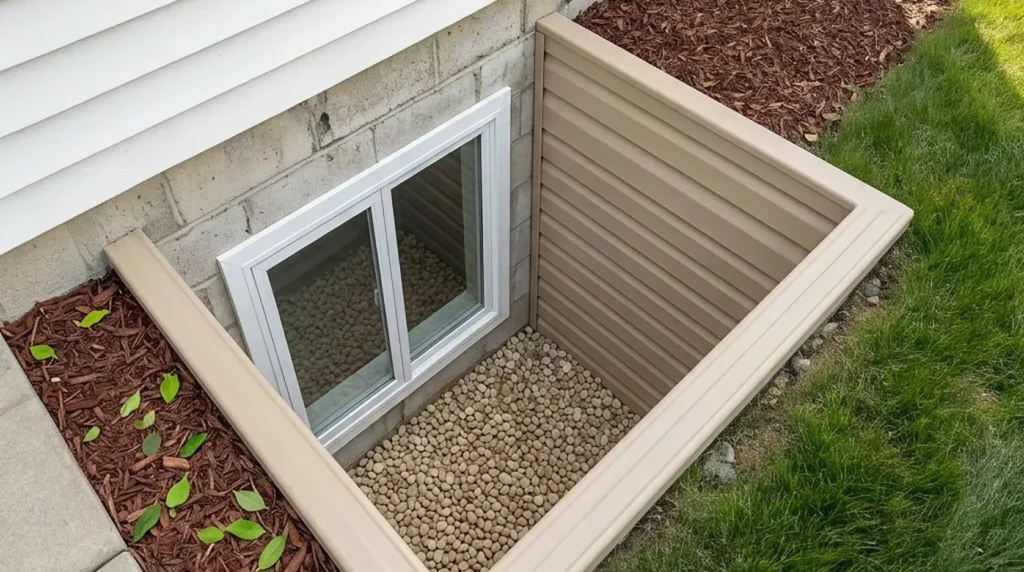
If the window is located below ground level, a window well with an area of at least 9 square feet (≥ 36″ × 36″) must be installed around it, along with a fixed staircase (riser ≤ 18″). Also, it is important to comply with egress window well requirements regarding dimensions and equipment to ensure a safe exit from the basement.
Egress Window Code Requirements Explained
The essential dimensions and rules outlined above are considered minimum requirements. Please note that in Massachusetts, double-pane fixed windows are permitted to have an open area of only 3.3 square feet (≈0.31 m²), with dimensions of 20″×24″, whereas for other window types, the standard is ≥ 5.7 square feet. Failure to comply with these requirements gives authorities the authority to deny the building’s occupancy permit, as this violation itself poses a serious safety hazard.

Egress Window Requirements for Bedroom Safety
Egress window requirements for bedroom provide a direct, unobstructed escape route in the event of a contingency. If any provision requires clarification, please refer to the official text of IRC R310. All in all, the requirements for egress windows in bedrooms are intended to ensure safety in accordance with generally accepted technical standards. It is recommended that you check current local building codes and consult with the officials before installing an emergency exit.
Please continue reading to find more about the essential specifications.
Bedroom Window Egress Requirements and Building Codes
Egress window requirements for bedroom adhere to strict regulations to enhance tenants’ safety, especially at night. Bedroom window egress requirements specify that each sleeping area must have at least one compliant emergency exit.
Current building codes and residential safety requirements stipulate that every bedroom (including a child’s room or a basement room) must have its own emergency window. According to IRC R310, the minimum dimensions of an emergency window opening must be at least 5.7 square feet with a height of ≥24″ and a width of ≥20″. In addition, the sill must not be higher than 44″ above floor level. The window must open fully without tools or keys.
In Massachusetts, there is an additional requirement. For double-pane fixed windows, the minimum allowable area is 3.3 square feet (with dimensions of 20″ × 24″). For other window types, the IRC R310 standards (5.7 square feet) remain in effect. If the bedroom is located in the basement, a light well of at least 9 square feet with a depth of at least 36 inches and built-in stairs must be provided.
It is mandatory to check and comply with local building codes and seek the advice of a building inspector before installing emergency windows in bedrooms.
Basement Egress Window Requirements for Finished Basements
Basement egress window requirements follow specific rules for window size, accessibility, and window wells. International and local building codes unequivocally prescribe the installation of basement egress windows in finished basements used for residential purposes.
Basement egress window requirements apply in particular to finished basements furnished as living spaces. The purpose is to ensure a safe exit from the building in an emergency. In new homes, such windows are planned from the start, whereas in renovations, existing openings are often enlarged or new ones created.
To install an escape window, a well is dug: at least 9 square feet in size with dimensions of ≥ 36″ × 36″. The well is equipped with drainage and lined with moisture-resistant materials/coating. The well cover or grate is so designed that it can be easily opened from the inside without tools.
If the bottom of the well is deeper than 44″, install a fixed ladder or steps with a standard pitch (≤ 18″) and a width of ≥ 12″. There must be a clear space of ≥ 36″ around the well extending toward the ground surface to ensure unobstructed exit.
PVC or metal wells with built-in drainage and a spring-loaded cover meet the minimum standards. Common mistakes include insufficient depth or area of the manhole, lack of drainage, improperly secured stairs, or inappropriate coverings. If installation details are not specified in the referenced sources, verify them with local codes or directly with a competent authority representative.
Installing an egress window requires approval from local authorities. In general, basement egress window requirements must be incorporated into the design at the initial stage of construction to comply with safety standards. Before installing an emergency entrance or exit in a basement or semi-basement, you should confer with an inspector first.
Egress Window Well Requirements You Must Follow
According to IRC R310 regulations, installing a well under an emergency window is strictly mandatory. The well must be at least 9 square feet, with minimum dimensions of 36″ × 36″.
Egress window well requirements outline proper depth, drainage, and ladder installation procedures for below-grade windows. The well must be located in front of the emergency window. It must be equipped with a drainage system (connected to the foundation drainage in accordance with Code Standard R405.1) and lined with moisture- and corrosion-resistant materials. The well cover or grate must be selected so that it does not obstruct the window’s operation and can be easily opened from the inside without tools.
If the well is deeper than 44″, install a fixed ladder or a stairway with a standard rise of ≤ 18″ and an internal width of ≥ 12″. The ladder must protrude from the wall by ≥ 3″ and be accessible when the window is fully open. A clear path to the outside with a width of ≥ 36″ must be left near the well.
A common solution is a metal or plastic well with a self-draining and spring-loaded cover that complies with technical standards. Common violations include insufficient well depth or area, lack of drainage, improperly secured stairs, or an inappropriate cover. If any requirements are not detailed in the available sources, verify them in the official code or with an inspector.
The installation of a window well is a complex and critical construction task that requires permits and official inspection. Inspectors check the well’s waterproofing and drainage system to prevent flooding, freezing of the structure, or frozen moisture buildup.
Regular perusal of norms and examination of communications and housing infrastructure guarantee compliance with current building code requirements. The design must take into account the proper placement of the well, the materials, the ladder/stairway, and waterproofing (for example, the use of special sealants and gaskets).
Egress window well requirements should be incorporated into the design as early as the planning stage, since the well is a critical component of a safe egress system. Always check current local building codes and consult with an inspector before installing an egress window well.
Plum ProExterior installs and replaces windows in compliance with current safety requirements. Learn more here.
Emergency Egress Window Requirements for Safe Exit
Egress window code requirements, which building authorities establish to standardize safety measures across regions, are to be obeyed without fail. They are designed and evaluated not merely as a formal component of building codes, but as a critical element of the safety and life-support systems in urban, suburban, and rural areas.
In the case of fire or heavy smoke, a window becomes an alternative escape route when doorways are no longer accessible. That is why experts take real-world usage scenarios into account, rather than focusing solely on geometric parameters.
It is critically important to be able to quickly open an emergency window without additional effort or accessories/aids. The window must open from the inside with a single action, even under stressful conditions or when visibility is limited. This explains why complex locks, decorative grilles without an emergency release mechanism, or any other obstacles that hamper evacuation are prohibited.
The balance between minimum dimensions and actual passability is another practically confirmed aspect of the issue requiring consideration. Fire safety studies show that even compliance with minimum standards does not always guarantee a safe evacuation for children, the elderly, or people with impaired mobility. Hence, modern recommendations often go beyond basic standards and focus on larger frames.
It is also important to consider access for rescue workers. A window must not only provide an exit but also allow rescue workers to enter the room from the outside while wearing full protective gear. This affects the choice of opening type (for example, casement windows are often more effective than sliding windows) and the window’s placement in the wall.
A practical detail that is often overlooked: the area in front of the window must remain clear. Furniture, built-in elements, or decorative structures effectively negate compliance with standards. Equally critical is the height of the windowsill – it must allow for quick access without the use of assistive devices.
Ultimately, emergency egress window requirements go beyond code compliance. They epitomize an engineering mindset and must account for human behavior in crises. They encompass solutions that work in real-world adverse conditions.
Egress Window Requirements in Massachusetts
Egress window requirements Massachusetts exemplify state-specific varieties of internationally recognized building ordinances and codes. The state adheres to the International Residential Code (IRC). Still, it reserves the right to have its own clarifications and enforcement practices, which are important to consider as early as the design phase.
Massachusetts officially adopts the IRC provisions through its State Building Code (780 CMR), and local building departments determine how these standards are implemented in practice.
Strict oversight of the condition of residential premises, particularly those used as sleeping areas, is a particularly noteworthy aspect. In Massachusetts, any residential unit must meet emergency exit requirements. This is especially relevant for renovations and remodeling projects: the absence of a proper window can legally alter the unit’s status.
In many municipalities across the state, inspectors pay close attention not only to the size of the window but also to the practicality of evacuation. For example, even if the window formally meets the minimum requirements, issues such as difficult access or the need for additional effort to open it could still arise.
Massachusetts’s environmental conditions also influence these requirements. Due to frequent rainfall, snow, and the risk of freezing, special attention is paid to drainage, waterproofing, and protection against water build-up near ground-level windows. This is a matter of both durability and safety: a jammed, blocked, flooded, or otherwise obstructed window loses its function as an emergency exit.
Another aspect is historic architecture. In cities like Boston, a significant portion of the housing stock is old, so modernization often creates conflict between modern requirements, existing structures, respect for heritage, and the desire to retain its original appearance. In such cases, alternative solutions are permitted, but only with the approval of local regulatory authorities.

Common Mistakes When Meeting Window Egress Requirements
Emergency egress window requirements facilitate quick evacuation and emergency responders’ entry to and from affected premises. In practical terms, compliance with window egress requirements is often undermined by errors stemming from a superficial understanding of regulations or from their disregard. Below are the most common mistakes related to egress windows, along with explanations of their causes and consequences.
- Dimensions as a Guide
One of the most common mistakes is measuring the window unit itself instead of the actual width of the opening when the window is fully open. Building codes regulate the clear opening. For example, double-hung or sliding windows may meet the dimensions but provide insufficient space for evacuation.
- Choosing the Wrong Window Type
The opening mechanism immediately impacts functionality. Practical experience suggests that casement windows are more likely to meet requirements without requiring an enlarged opening. Horizontal sliders often fall short of meeting specifications due to their limited opening area. This is a technical decision that should be made as early as the design phase.
- Ignoring the Height of the Window Sill
Even if the window is the correct size, if it is positioned too high off the floor, evacuation can become difficult or dangerous. This is particularly critical for children and the elderly. In practice, this is one of the reasons for refusing to approve a building for occupancy.
- Blocked Access to Windows
Furniture, decorative panels, built-in cabinets, or even heavy curtains can get in the way of quick access. Fire safety studies reveal that during an evacuation, even a delay of a few seconds can be a matter of life or death, especially when heavy smoke and heat spread rapidly.
- Opting for Blockers with no Emergency Release Mechanism
Bars or grids, safety screens, and child safety locks that cannot be opened quickly and easily are a serious neglect. Construction ordinances allow such features only if there is an option for opening a window from the inside without auxiliary means.
- Lack of Attention to Basement Designs
When it comes to basements, the significance of space in front of the emergency window is often overlooked. A poorly designed well, drainage issues, or difficulty accessing egress windows can completely negate the function of an emergency exit, even if the window itself meets safety standards.
- Taking Compliance for a Formality
When a lack of a comprehensive approach towards compliance occurs, it often results in relying solely on minimum requirements. Fire department experience shows that real-life evacuation scenarios are much more complex.
When limited visibility, physical constraints, panic, and immense stress escalate, minimum standards are a baseline. An optimal solution means prudence, common sense, resilience, integrity, responsibility, valor, and a good deal of selflessness on the part of all parties involved.
- Neglect of the Rescue Personnel’s Access
An egress window should function as both an entry and an exit point. Improper placement, narrow openings, or complex opening mechanisms can hinder access for rescuers in full gear.
- DIY Modifications without Professional Inspection
Occasionally, homeowners tend to modify existing windows without consulting professionals. This can compromise airtightness, reduce structural integrity, or lead to violations of building codes. Under many jurisdictions, such modifications require permits and approval.
- Underestimating Local Regulations
Local requirements vary, whereas national codes set basic standards. Disregard for this situation increases the chance of project delays and costly rework.
How to Choose Windows that Meet Egress Window Requirements
Technical considerations, understanding of regulations, and awareness of actual operating conditions all influence the selection of windows that fulfill egress window requirements. The solution must ensure conformity with codes and efficiency in critical situations.
First and foremost, it is paramount to determine the room’s function. Requirements are stricter for bedrooms and living areas, so it’s important to plan for a sufficiently large opening from the start. Working right up to the minimum requirements limits the choice of window types and complicates installation.
Engineering studies and installation experience confirm that casement windows (outward-opening) provide the largest effective opening area for the same overall dimensions. In narrow walls, this is often the only way to achieve the required opening area without widening the frame. At the same time, sliding or lift-and-slide designs may be suitable for wider openings but require precise calculations.
Actual conditions of use substantiate that the window should open easily, without effort or additional steps. It is worth paying attention to the quality of the fittings. According to manufacturers, opening mechanisms are the components most likely to become vulnerable in emergency exit systems after several years of use.
Location and accessibility imply that even a properly selected window will not fulfill its function if it is difficult to reach. Furniture layout, sill height, and the free space in front of the window must be taken into account as early as possible in the interior design stage.
Particular attention should be paid to climatic conditions. In regions with high humidity or significant temperature fluctuations, it is important to choose materials resistant to deformation, wear, and corrosion. This directly affects the long-term performance of the opening mechanism.
The installation process is just as important as the window itself. Even a high-quality design can lose its functionality due to improper installation, which affects both sealing and safety.
Unity Through Vision
PlumPro Exteriors engineers solutions thoughtfully, with safety, compliance, and durability in mind. We execute every project integrously, restore sympathetically, and design innovatively. Construction to us is a responsibility imbued with precision, accountability, and observance of safety standards. There’s no such thing as being too careful when it comes to safety and construction work. Let’s take both to the next level together.