
President at Plum ProExteriors
 09.28.2026
 11 min
 13816
13816
Massachusetts Siding Permits: 780 CMR Explained
Almost every siding replacement in Massachusetts requires a building permit, and 780 CMR – the Massachusetts State Building Code – is where that requirement lives. Siding permits aren’t optional paperwork; the code makes it unlawful to alter or repair a structure without one, and towns list siding alongside roofing, decks, and additions on their permit schedules.
There’s a wrinkle most homeowners don’t see coming. If old siding is coming off a pre-1980 house, many towns also want an asbestos test filed with the local Health Department before demolition begins.
The good news: the process is predictable once you know what your town’s counter expects. Fees, forms, and turnaround times vary from Wellesley to Fall River, but the underlying rule doesn’t. Start with the question that brought you here.
Do You Need a Permit for Siding in Massachusetts?
Yes. If you’re asking “do I need a permit for siding replacement,” the short answer in almost every Massachusetts city and town is that you do. The state building code, 780 CMR, makes it unlawful to alter or repair a structure without first pulling a permit, and siding is named right alongside roofing, decks, and additions on most municipal permit lists.
This holds whether you’re in Bedford, Fall River, Taunton, or a small South Shore town nobody outside the county has heard of. Fall River’s Inspectional Services Department, for example, spells out that replacing exterior siding requires a building permit, unlike painting or carpet, which fall under cosmetic work.
Homeowners often miss a second layer. If you’re tearing off old siding – and on a house built before the late 1970s, that’s a real concern – many towns require an asbestos test to be performed and the report filed with the local Health Department before demolition starts. That’s separate from the building permit itself.
The basic rule is statewide, but siding permit requirements vary by town, especially when it comes to paperwork and fees. Confirm the details with your local building department or check the areas we serve across Massachusetts. To understand why this rule exists, it helps to look at what 780 CMR actually says about exterior work.
What 780 CMR Says About Siding Work
The Massachusetts State Building Code splits into two volumes. The Residential volume covers one- and two-family homes and townhouses three stories or less, plus accessory structures like garages and sheds. Everything else – apartment buildings, commercial storefronts – falls under the Base volume. If you own a single-family in Quincy or a two-family in Somerville, the Residential volume is your rulebook.

Here’s where people get tripped up. The code does list exterior work that skips a permit entirely, and the R105.2 exempt work list is specific: window awnings projecting no more than 54 inches, detached decks up to 200 square feet and under 30 inches above grade, fences up to seven feet, retaining walls under four feet. Siding isn’t on that list. Neither is anything close to it.
So do you need a permit to install vinyl siding? Yes – vinyl, fiber cement, cedar shingle, it doesn’t matter. A full wrap touches your home’s weather barrier and energy envelope, which is exactly the kind of work siding permits exist to document and inspect.
That paper trail matters later, too. Insurers can limit or deny coverage on damage tied to unpermitted work, and appraisers may discount improvements that never cleared the building department – a real problem when you list the house. Code-compliant exterior remodeling services keep that record clean from day one.
Knowing the code is one thing – actually getting your siding permit approved is the next practical step.
Steps to Get Your Siding Permit Approved
1. Check local building department requirements
Every town runs its own counter, so permits for re-siding a house don’t all come with the same paperwork. Boston handles standard siding replacement through a Short-Form permit, while Needham requires electronic applications and an asbestos test report filed with the Health Department when existing siding is removed. A quick call before starting can save you from missing paperwork or unexpected delays.
2. Hire a licensed MA contractor (HIC + CSL requirements)
Before hiring, verify your contractor’s Home Improvement Contractor (HIC) registration and Construction Supervisor License (CSL). Since July 2008, Massachusetts identifies siding as work requiring both HIC registration and an appropriate CSL, along with a building permit. Have your contractor handle the permit application and keep the approved permit posted at the job site.
3. Submit application and pay fees
Siding permits typically require a description of the work, estimated project cost, contractor information, and any supporting documents your town requests. Permit fees vary by municipality and project value, so factor them into your budget alongside the materials and labor outlined in our siding installation cost guide.
4. Schedule inspections and final sign-off
Once your siding is installed, schedule the required inspections with your local building department. The inspector checks the completed work against the approved permit and applicable building code requirements. Don’t forget to confirm that the permit has been officially closed. It gives you a record of the completed work that may be useful when selling or refinancing your home.
But not every siding repair requires a permit. Here’s how to tell when you need one.
When a Permit Is NOT Required
One carve-out exists, and it’s narrow. Section 201 of the state building code – paired with R105.2.2 – defines an ordinary repair as maintenance that doesn’t affect structure, egress, fire protection, energy conservation, or utilities. That’s the whole exemption.
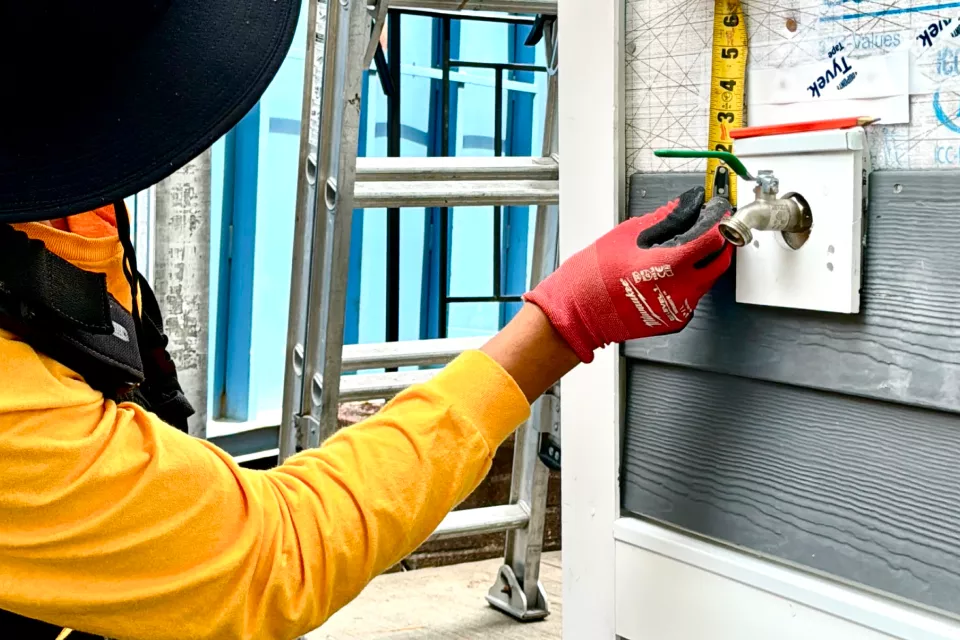
So what’s permit-free? Painting, staining, wallpapering, tiling, carpeting, cabinets, countertops – cosmetic finish work. Do you need a permit to paint your house in Massachusetts? No. Departments from Fall River to Clinton list interior and exterior painting as exempt. Same for refreshing tired vinyl, and this painting vinyl siding guide covers when that’s reasonable versus a stopgap.
Scale is the tricky part. Inspectors read siding like roofing: swapping a few damaged shingles is ordinary repair – reshingling isn’t. Two cracked panels after a January ice event, or a patch where a gutter dumped water for years – that’s maintenance. Wrapping a whole elevation is regulated work.
So do you need permits for siding on small jobs? Usually not, but no square-footage threshold exists, so siding permits get skipped by mistake. Some towns want a call first. One question settles it. Skipping a required permit carries real financial and legal consequences.
What Happens If You Replace Siding Without a Permit?
The penalties aren’t theoretical. Under 780 CMR, a building code violation carries a fine of up to $1,000, imprisonment for up to a year, or both – for each violation. And each day the violation continues counts as its own offense. Massachusetts municipalities apply that as up to $1,000 per day, which is how a summer project that slipped past the building department turns into a five-figure exposure by fall.
Then there’s the correction cost. Your building inspector can issue a stop-work order that halts the job on the spot, and you’ll still have to apply for the permit after the fact – typically at double or triple the normal fee, depending on the town. Worse, covered work may need to be uncovered for inspection. That means pulling off new siding you just paid for so an inspector can see the sheathing, house wrap, and flashing underneath.
The resale and insurance side is quieter but sticks around longer. Unpermitted siding shows up during a buyer’s due diligence, and a missing final sign-off can stall a closing or knock down an appraisal. Insurers may also push back on a water-intrusion claim tied to work that never passed inspection. Skipping siding permits saves a few hundred dollars now and can cost far more later. Because the stakes are real, most homeowners let a licensed contractor manage permitting from start to finish.
Does Plum ProExteriors Handle the Permit Process?
Yes. Pulling and managing siding permits is standard on every job, not an add-on you have to ask about. The team is licensed and insured, based at 892 Worcester St in Wellesley, MA, which means the Construction Supervisor License requirement is already covered before an application ever reaches your building department.

That reach extends past state lines. Permitting knowledge covers Massachusetts, New Hampshire, Rhode Island, and Maine, so a homeowner in Newburyport and one just over the border in Seabrook get the same handled-for-you process. Each state – and each town inside it – runs its counters differently, and knowing that ahead of time is what keeps a project from stalling at week two.
What that looks like in practice: confirming which form your town uses, arranging the asbestos test and Health Department filing when old siding comes off, submitting the application with fees, and scheduling the inspections through final sign-off. You get the closed permit record, which is the piece that matters at resale.
The same code-compliant approach applies across residential and commercial work, and it’s built into professional siding installation services from the first walkthrough.
Call or contact Plum Pro today to get a free estimate on your exterior project – the consultation and instant estimate cost nothing, and permitting is discussed upfront with no surprises.
Here’s what nearly a decade of pulling siding permits across Massachusetts towns has actually taught our crews.
What 8+ years of Massachusetts Siding Permits Has Taught Us
500+ completed projects across Massachusetts towns teach you patterns no code book prints.
Timelines vary more than fees do. Some building departments turn a siding application around in a few business days, while others sit closer to three weeks, especially in spring when every contractor in the state files at once. If you’re planning a summer job, submit paperwork in March or April. Waiting until June means competing with roofers, deck builders, and everyone else who watched the frost leave the ground.
Paperwork depth varies too. A handful of towns want nothing beyond the application and the CSL number. Others want the asbestos report filed before they’ll even open the file, a homeowner affidavit if you’re pulling it yourself, and product spec sheets for the cladding you’ve chosen. Choosing materials early helps here – worth reviewing the best siding options for New England homes before you apply, not after.
The pattern that costs homeowners most? Open permits nobody closed. A job finishes, the crew leaves, the final inspection never gets scheduled, and five years later a title search flags it during a closing. Buyers’ attorneys catch it every time.
So the real value of doing this right isn’t avoiding a fine. It’s that when you sell, the record shows a permitted, inspected, signed-off installation – and nobody renegotiates your price over a piece of missing paper.
The bottom line on siding permits in Massachusetts
Three things to carry forward: confirm your town’s specific paperwork before you plan a start date, hire a contractor holding both HIC registration and a Construction Supervisor License, and make sure someone actually schedules the final inspection so the permit closes.
If you’re still weighing materials or timing, there’s more practical exterior guidance on our blog covering New England-specific siding decisions.
Want to see what permitted, code-compliant work looks like on real Massachusetts homes? Browse completed siding projects across the South Shore, MetroWest, and beyond.
Call or contact Plum Pro today to get a free estimate on your exterior project. We walk through permitting upfront, so you know exactly what your town requires before anything starts.
FAQ
1. Can you replace a siding panel without a permit?
Usually yes – patching one damaged panel is treated as ordinary maintenance in most Massachusetts towns. Replacing multiple panels, a full elevation, or the whole house crosses into permitted work. Call your building department first, since “minor repair” gets interpreted town to town.
2. Do you need a permit to install vinyl siding?
Yes. Vinyl is treated like any other cladding under 780 CMR, so new installs and replacements need a building permit in nearly every Massachusetts municipality. Your licensed contractor pulls it and confirms town-specific requirements before the first panel goes up.
3. How much does a siding permit cost in Massachusetts?
Fees vary widely by town – some charge a flat fee, while others charge a percentage of total project cost, so check your local building department’s fee schedule before budgeting.
4. What can a homeowner do without a permit in Massachusetts?
Ordinary repairs that don’t touch structure, egress, fire protection, energy conservation, or utilities. That covers interior and exterior painting, wallpapering, and cosmetic touch-ups. Small awnings and low fences are also commonly exempt under 780 CMR R105.2.
5. Do you need a permit to paint your house in Massachusetts?
No. Section 201 of 780 CMR classifies interior and exterior painting as an ordinary repair. The exemption covers paint only – if you’re also replacing or repairing siding, that portion still needs its own permit.