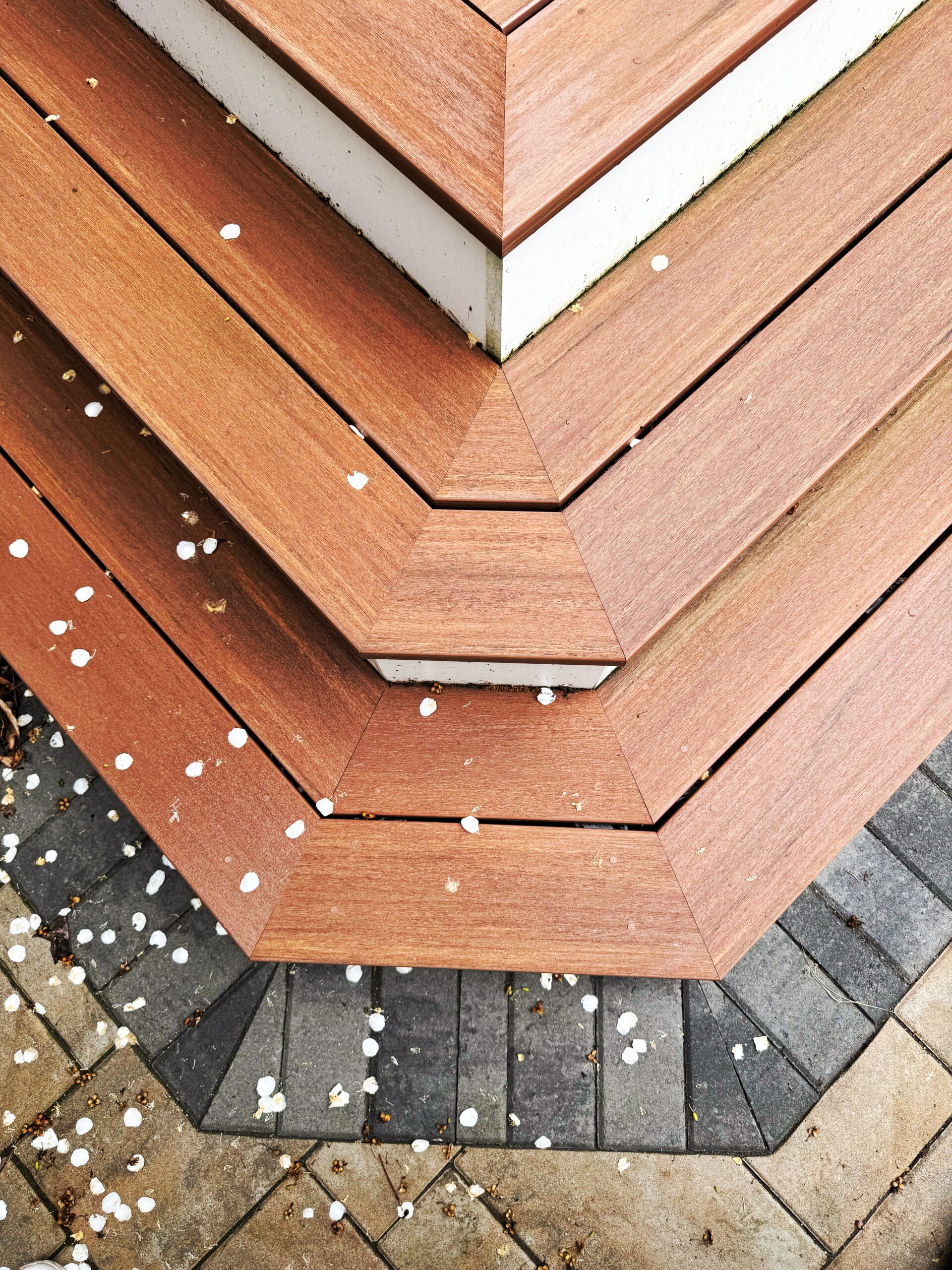
trex vs azek decking: which is better for a new england deck?
Trex and AZEK are the two names homeowners ask about most, and they are not the same kind of board. Trex is a capped composite: wood fiber and plastic with a protective shell. AZEK is capped PVC: no wood fiber at all. That one difference explains almost everything else about how they behave on a deck in Massachusetts, from how they handle a wet, shaded yard to how they feel underfoot in July to how much they move when the temperature swings.
price your deck in seconds
Answer five quick questions and see a standard, premium and deluxe range. No email needed to see the price.
our achievements






 ★★★★★5/5 · 170+ reviews
 ★★★★★5/5
 ★★★★★5/5
 ★★★★★5/5
 ★★★★★5/5
 ★★★★★5/5
 ★★★★★5/5
both are excellent; the yard decides
Both will outlast a wood deck by decades. AZEK resists moisture, mildew and staining better because it has no wood fiber to absorb water, it runs noticeably cooler in the sun, it is lighter, and it carries the longer warranty. It also costs more, and it expands and contracts more with temperature, which the installer has to plan for. Trex gives you most of the performance at a lower price, with a strong wood-grain look and, in its upper lines, very good scratch resistance. On a shaded, damp or lakeside lot, next to a pool, or on a deck where people go barefoot, we lean AZEK. On a sunny, open yard where budget matters, we lean Trex.

what a new deck costs
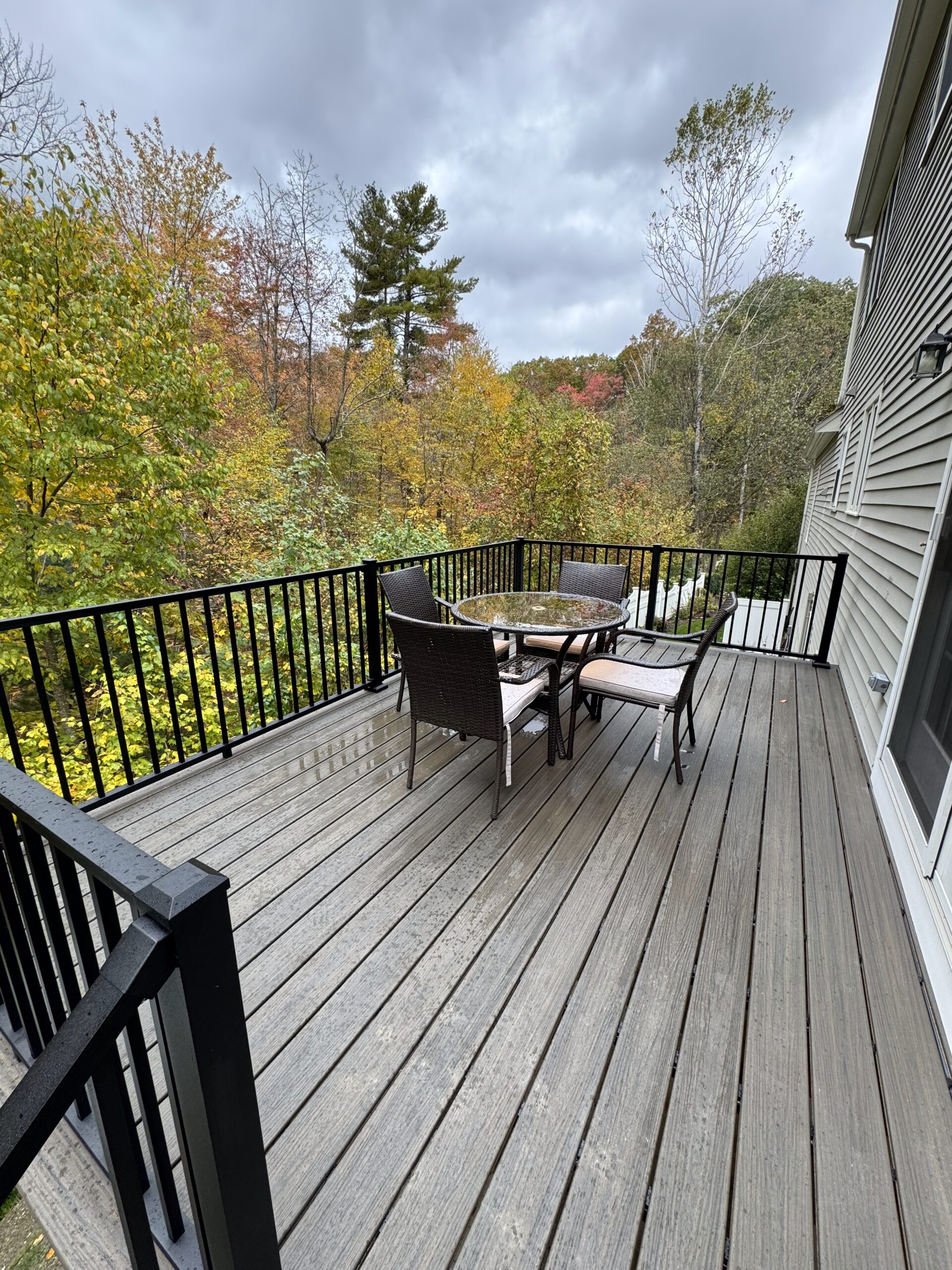
Deck pricing depends on size, height off the ground, the decking and railing you choose, stairs and the site itself. Answer a few questions below for a standard, premium and deluxe range in seconds. Every project is quoted after we visit, and financing is available on every service we offer.
Request your exact quote
Your answers and estimate are already in the message. Add your details and we will schedule a free on-site visit.
how they compare
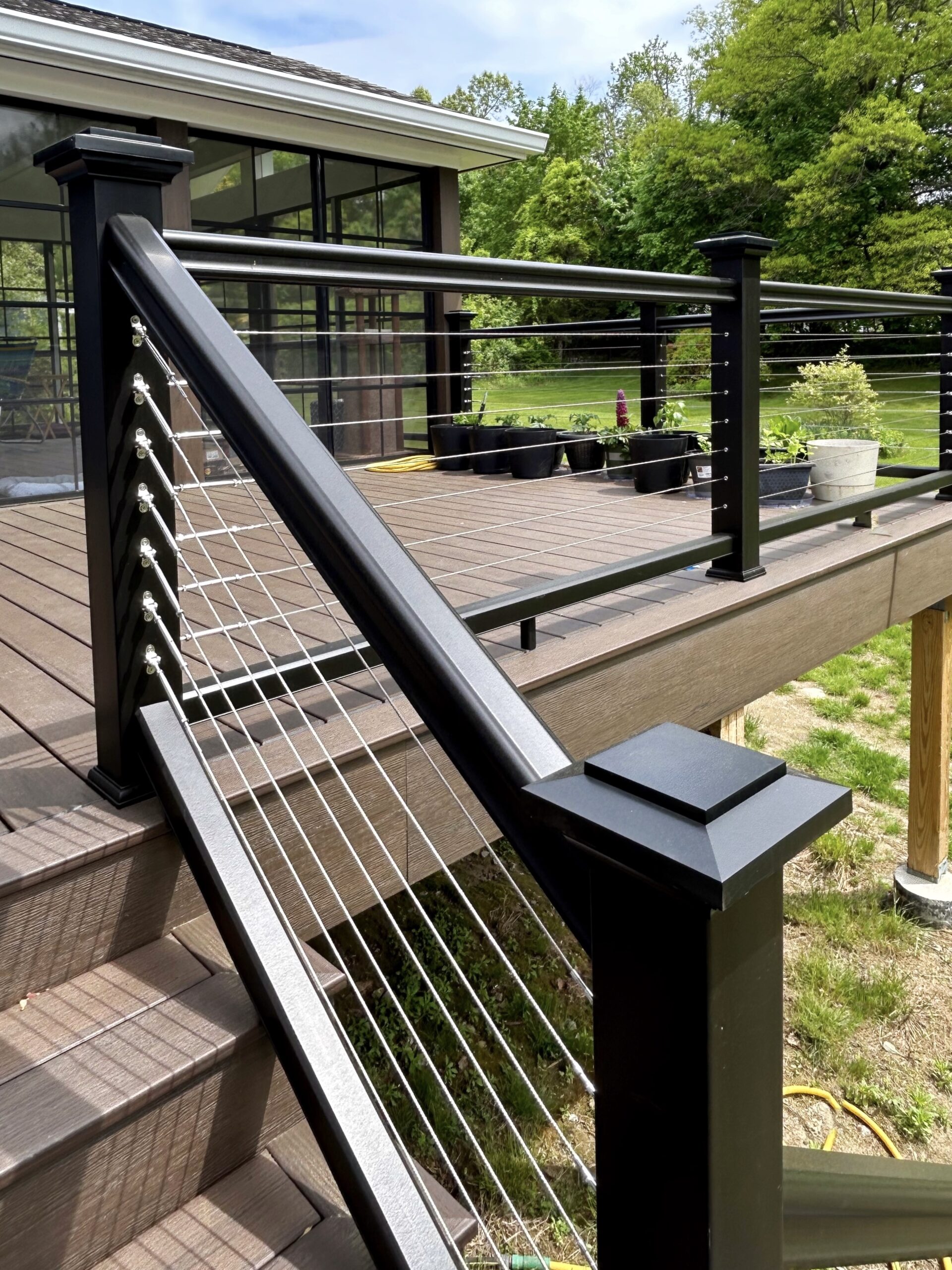
The comparison we walk through on an estimate. Scroll through it.
AZEK, TimberTech and the name confusion
AZEK and TimberTech are the same company. The PVC boards sold for years as AZEK are now labeled TimberTech Advanced PVC, and TimberTech also sells capped composite lines that compete directly with Trex. So the real comparison is capped composite (Trex, or TimberTech composite) against capped PVC (AZEK). When a quote says TimberTech, ask which one.
What they are made of
Trex is a wood-plastic composite core, largely recycled wood fiber and polyethylene, wrapped in a protective cap on three sides; the exposed underside can take on some moisture over time. AZEK is solid cellular PVC capped on all four sides. No wood fiber means it cannot absorb water, so it does not swell, mildew or rot from the inside, and it weighs less. Because it is all plastic, it also moves more with heat and cold.
Moisture, mildew and shade
AZEK wins. A composite board under tree cover or near water can develop mildew on its uncapped underside and at cut ends. PVC does not. If your deck sits in shade most of the day or near a lake or wetland, that difference is worth paying for.
Heat underfoot
AZEK runs cooler, up to about 30 degrees cooler than a standard composite in the same color, because PVC holds less heat than a dense wood-fiber core. Lighter colors stay coolest in either brand, and Trex has improved heat performance in its newest line. On a south-facing deck where people go barefoot, this is the difference that gets noticed.
Expansion and contraction
The drawback national comparisons skip. PVC expands and contracts more than composite, and a Massachusetts deck sees a swing of well over 100 degrees between a January night and a July afternoon. Boards installed tight on a hot day gap in winter; boards installed tight on a cold day buckle in summer. The fix is in the installation: end gaps set to the manufacturer's chart for that day's temperature, the right fastener system, and joists on 12-inch centers where the brand calls for it on diagonal or wide-board layouts. Composite moves less, but the same rules apply.
Scratches, fading and reflected heat
Trex Transcend has a hard cap that stands up to dog claws and dragged furniture; AZEK resists scratches well but a deep gouge shows more on the softer PVC core. Both caps resist fading and stains far better than uncapped composite or wood; AZEK boards from roughly 2007 to 2012 had chalking complaints, and the current capped boards are a different product. One more thing: low-E glass on a modern window can focus sunlight hot enough to warp or melt either board, and it is a warranty exclusion for both brands. If a deck sits below large south- or west-facing windows, we lay out the boards, and add a screen or awning if needed, so the reflection does not land on them.
Look, feel and warranty
Trex has a strong embossed wood grain and a wide color range. AZEK has a more refined, lower-gloss grain and premium colors with subtle variation, and it is lighter to carry and easier to cut. Trex warranties run 25 years on Enhance, 35 on Select and 50 on Transcend and Lineage, against fading and staining as well as defects. AZEK carries a 50-year limited fade and stain warranty and a lifetime limited warranty on the board itself. Both require correct installation, including the fastener system the manufacturer approves, which is one reason to use a crew that installs them every week.
What the national price ranges leave out
Search this comparison and you will see $19 to $35 per square foot installed for Trex and $22 to $37 for AZEK. Those numbers price the boards and the labor to screw them to an existing frame on a flat lot. They do not include footings dug below the frost line, a new frame, the ledger flashed into the house, code-height railings and stairs, drawings, the permit and inspections, or labor at Greater Boston rates. Our price covers the whole deck, which is why it is a different number. When you compare quotes, compare what is inside them.
what each costs installed
Composite decking
Trex Enhance and Select at standard; Transcend at premium; AZEK and other PVC boards at deluxe
- Standard
- $183
- Premium
- $233
- Deluxe
- $298
Wood decking
Pressure-treated or cedar; Ipe at the deluxe tier
- Standard
- $141
- Premium
- $178
- Deluxe
- $318
Which one for your deck
Shaded, wooded, damp or lakeside lot: AZEK. Next to a pool or hot tub: AZEK. South-facing and barefoot in summer: AZEK, or Trex Lineage in a light color. Dogs and heavy furniture: Trex Transcend or AZEK. Sunny, open yard and a budget to respect: Trex Enhance or Select. Longest warranty and lightest board: AZEK. Below big low-E windows: either, with the reflection dealt with first. We bring samples of both to every estimate, and we recommend based on the yard, not the brand. See our deck cost guide and our decking materials guide. The calculator above gives a planning range; the free estimate turns it into a measured quote.
how plum proexteriors builds a composite deck
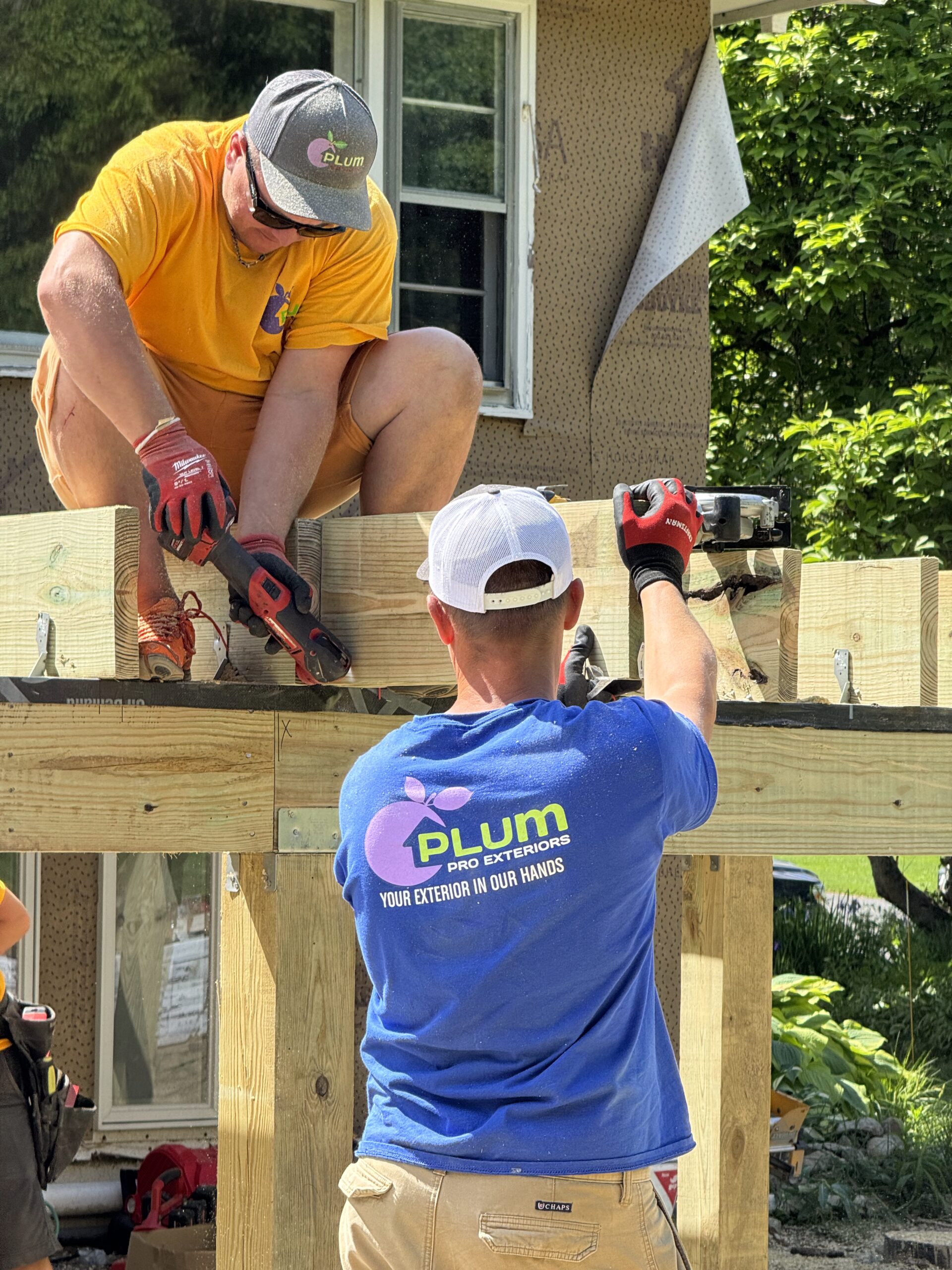
We visit, look at the yard, the sun, the trees and the wall the deck attaches to, and bring samples of both boards. You get a written quote that lists the decking, railings, stairs, footings and permit. We file with the town, build once the permit is issued, set the board gaps for the temperature that day, and schedule the inspections. We install Trex, TimberTech, AZEK and Fiberon across Wellesley, Newton, Natick, Needham, Brookline and Framingham. Financing is available.

what our clients say
The owner is on site for every project, and when the job is done he asks every client the same question on camera: what do you think? These are their answers, at their own homes.
 Tap to play
 Tap to play
 Tap to play
 Tap to play
 Tap to play
 Tap to play
 Tap to play
 Tap to play
 Tap to play
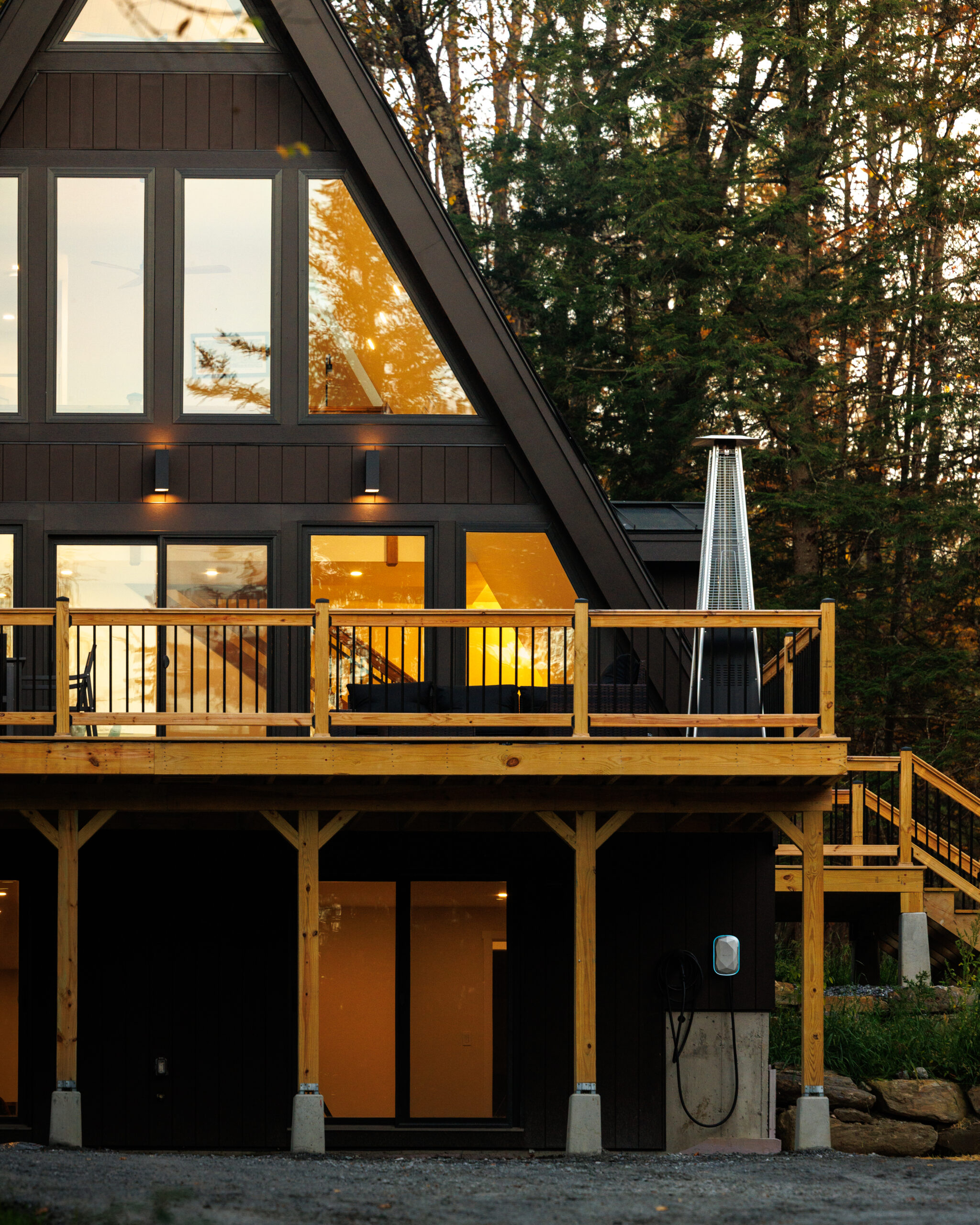
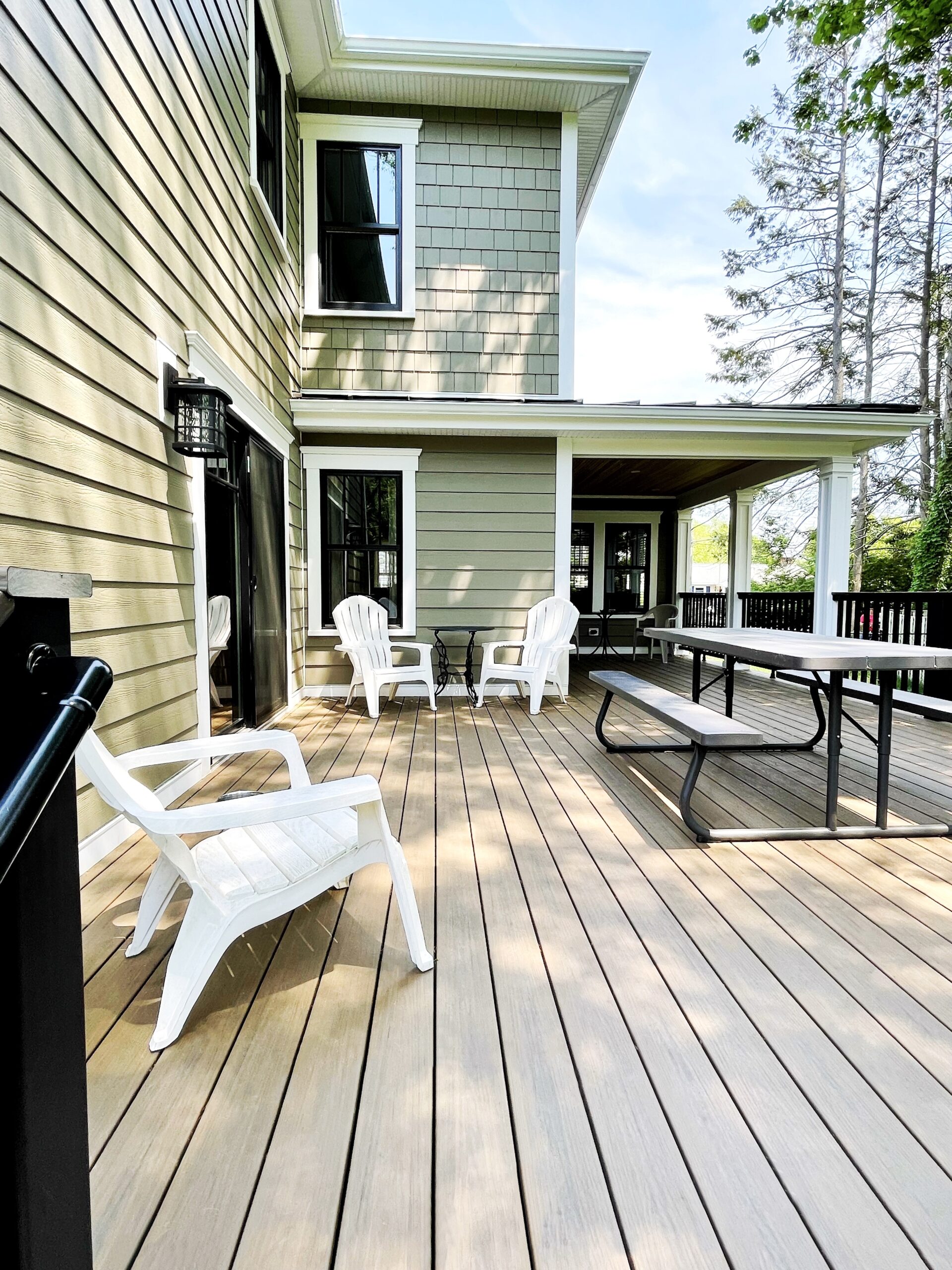
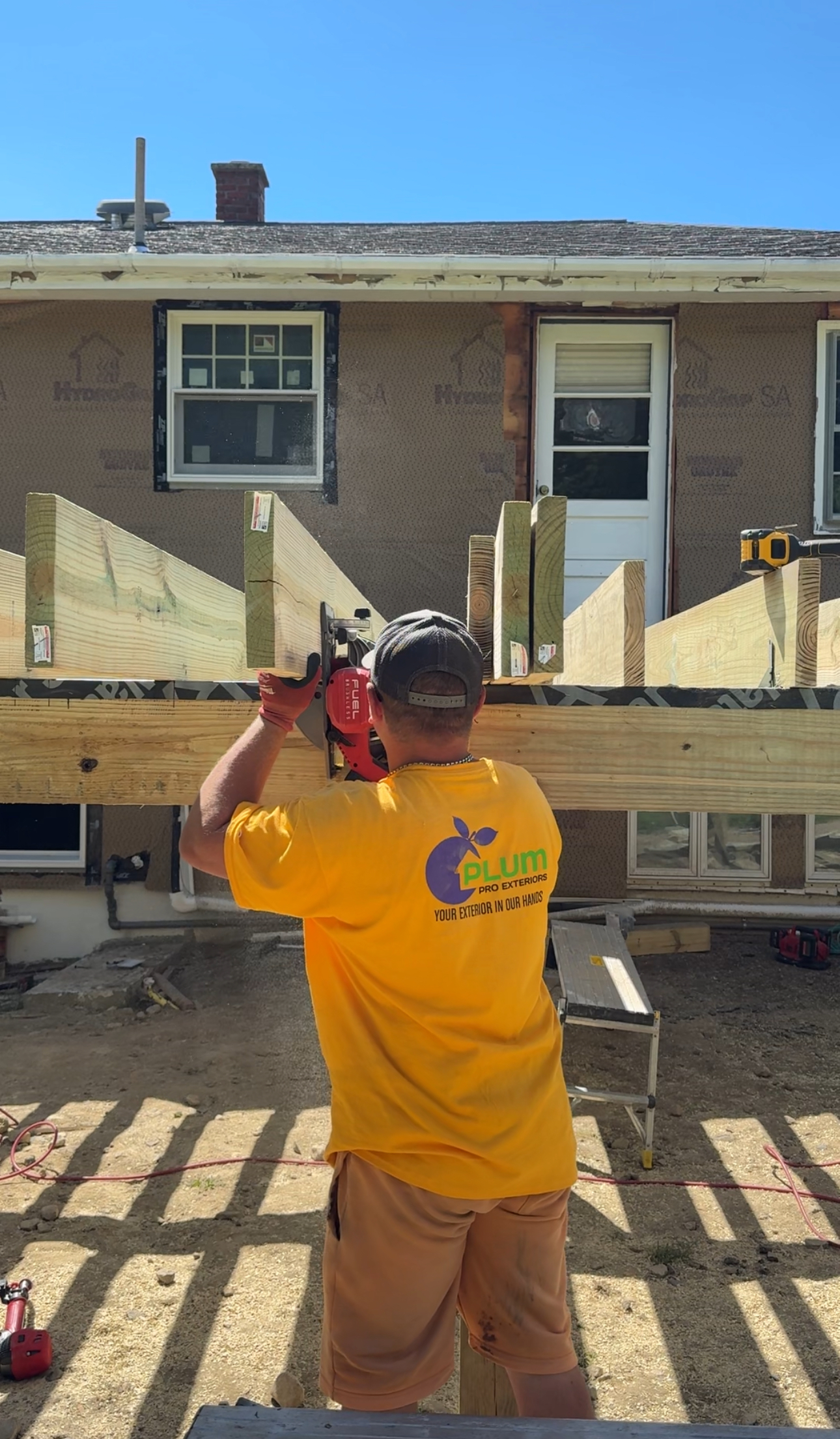
recent composite decks
frequently asked questions
Is AZEK better than Trex?
For moisture, heat and warranty, yes. For price, wood-grain look and resistance to deep gouges, Trex has the edge. Both are far better than wood.
What are the problems with AZEK decking?
It costs more, it expands and contracts more than composite so the installation has to allow for it, a deep gouge shows more than on a hard-capped composite, and boards from the 2007 to 2012 era had fading complaints. None of those apply to a current board installed correctly.
Does AZEK get hot in the sun?
Less than composite, by as much as 30 degrees in the same color. Light colors stay coolest. No deck board is cold in full August sun, but AZEK is the most comfortable of the capped boards.
How much more does AZEK cost than Trex?
On our pricing, AZEK sits in the deluxe tier at $298 per square foot installed, versus $183 to $233 for Trex lines. The calculator on this page shows your size.
Is AZEK the same as TimberTech?
Same company. AZEK is the PVC line, now sold as TimberTech Advanced PVC. TimberTech also makes capped composite boards that compete with Trex.
Can I put Trex or AZEK on my existing frame?
If the frame is sound and the joists are on 16-inch centers, yes, and 12-inch centers for some PVC layouts. Most older frames are on 24-inch centers and need reframing. See our guide to deck cost in Massachusetts.
Which lasts longer?
Both carry warranties of 25 to 50 years and both will last far longer than wood. AZEK has the longer written warranty.
Do you install both?
Yes. Trex, TimberTech and AZEK, and Fiberon, across Wellesley, Newton, Natick, Needham, Brookline and Framingham.
get a free deck estimate
Call us or send the estimate form. We will look at your yard, bring samples of both boards and give you a written quote.
Call (508) 266-5411 Send the estimate form