full-frame vs insert window replacement
The frame decides the job. Here is how to tell which one your windows need, what each one costs installed, and what you give up either way.
price your windows in seconds
Answer a few quick questions and see a standard, premium and deluxe range with our installed prices. No email needed to see the price.
our achievements











 ★★★★★5/5 · 170+ reviews
 ★★★★★5/5
 ★★★★★5/5
 ★★★★★5/5
 ★★★★★5/5
 ★★★★★5/5
 ★★★★★5/5
the short answer
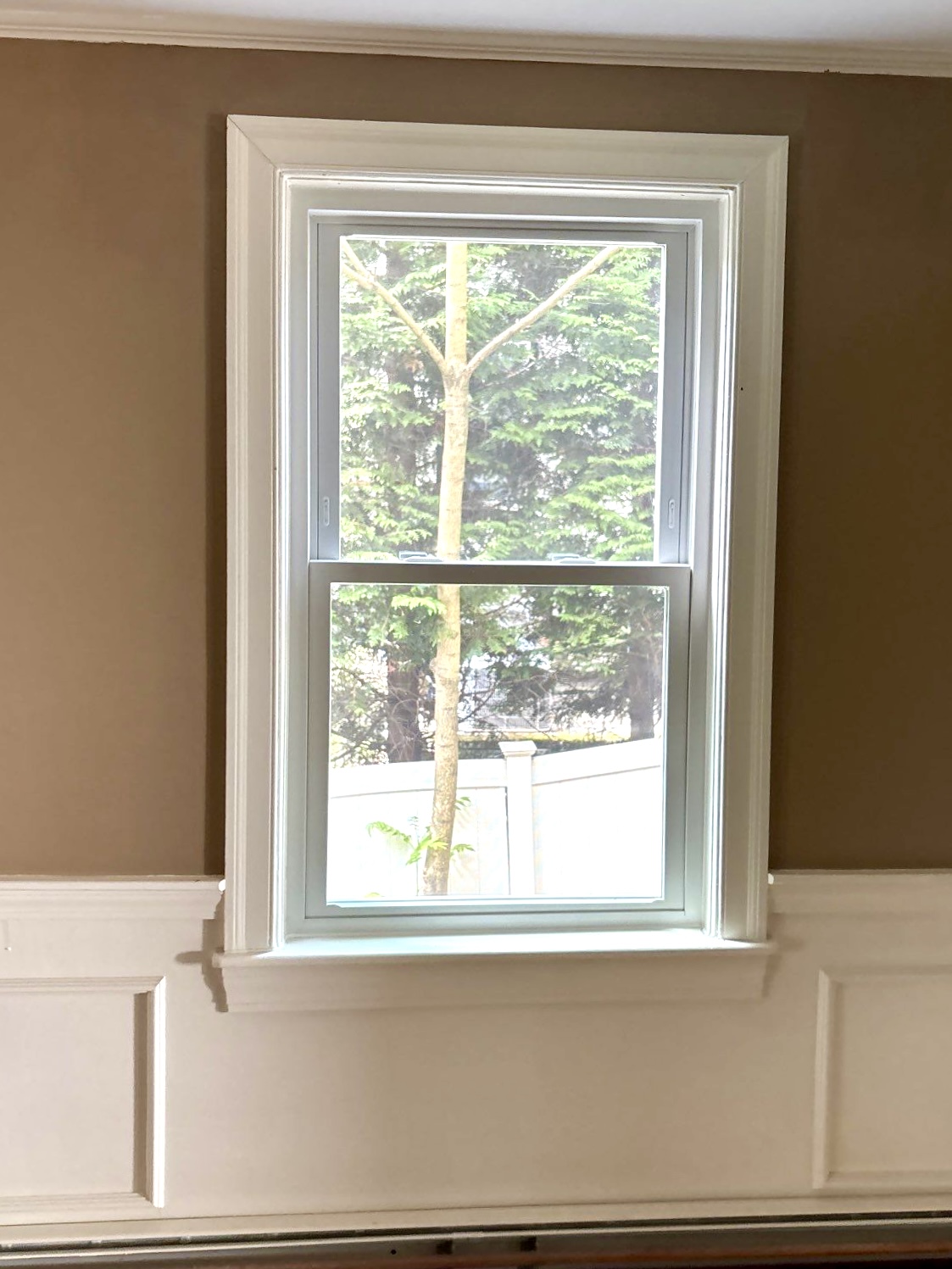
An insert replacement (also called a pocket or retrofit window) leaves your existing window frame, sill and trim in place and sets a new window unit inside it. A full-frame replacement removes everything down to the rough opening in the wall, inspects and repairs the framing, flashes the opening and installs a complete new window with new exterior trim. Insert is the right job when the old frame is square, dry and solid. Full-frame is the right job when there is rot, water damage, a racked frame, old weight-and-pulley pockets letting in cold air, or you want to change the size or style of the window.
Plum ProExteriors installs both, often on the same house. We look at every opening inside and out during the free estimate and tell you which one each window needs. Use the calculator on this page to price either option with our installed prices.
what each method removes and keeps
Insert replacement
- Removed: the old sashes, glass, balances or weights, tracks and jamb liners.
- Kept: the outer frame, side jambs, sill, interior casing and exterior trim and siding.
- How it goes in: the new unit is measured to the inside of the old frame, set in place, shimmed square, screwed through the jambs, insulated with low-expansion foam and sealed inside and out.
- Time: usually one to two hours per window. A crew can do a whole floor in a day.
Full-frame replacement
- Removed: sashes, frame, jambs, sill, interior casing, exterior trim or brickmould, down to the studs of the rough opening.
- Inspected and repaired: the rough sill, king and jack studs, sheathing and the weather barrier around the opening. Rot gets cut out and replaced here, where it can actually be reached.
- Installed: sill pan and flashing tape tied into the housewrap, a new-construction window with a nailing fin, insulation, new interior casing and new exterior trim.
- Time: four to eight hours per window, longer where siding has to be cut back and patched.
when an insert window is the right call
- The frame is square, level and solid when we probe the sill and the bottom of the jambs with an awl.
- There are no water stains, bubbling paint or soft spots on the interior casing or the drywall below the window.
- You want to keep original interior woodwork, which matters in many older homes in Newton, Brookline, Cambridge and Wellesley.
- The siding is in good shape and you do not want it disturbed.
- You are keeping the same size and operating style.
The trade-off is glass. Because the new unit sits inside the old frame, you lose roughly an inch of visible glass on each side. On a standard double-hung most people never notice; on a small bathroom or kitchen window it can look tight. We measure and tell you before you decide.
when full-frame is the right call
- The sill or jambs are soft, or the frame is out of square and the sashes bind.
- There is evidence of water getting behind the frame: stains on the drywall below, peeling paint on the casing, a musty smell.
- The house has original weight-and-pulley windows. The weight pockets are hollow and uninsulated, and an insert leaves them that way. Full-frame lets us fill and seal them.
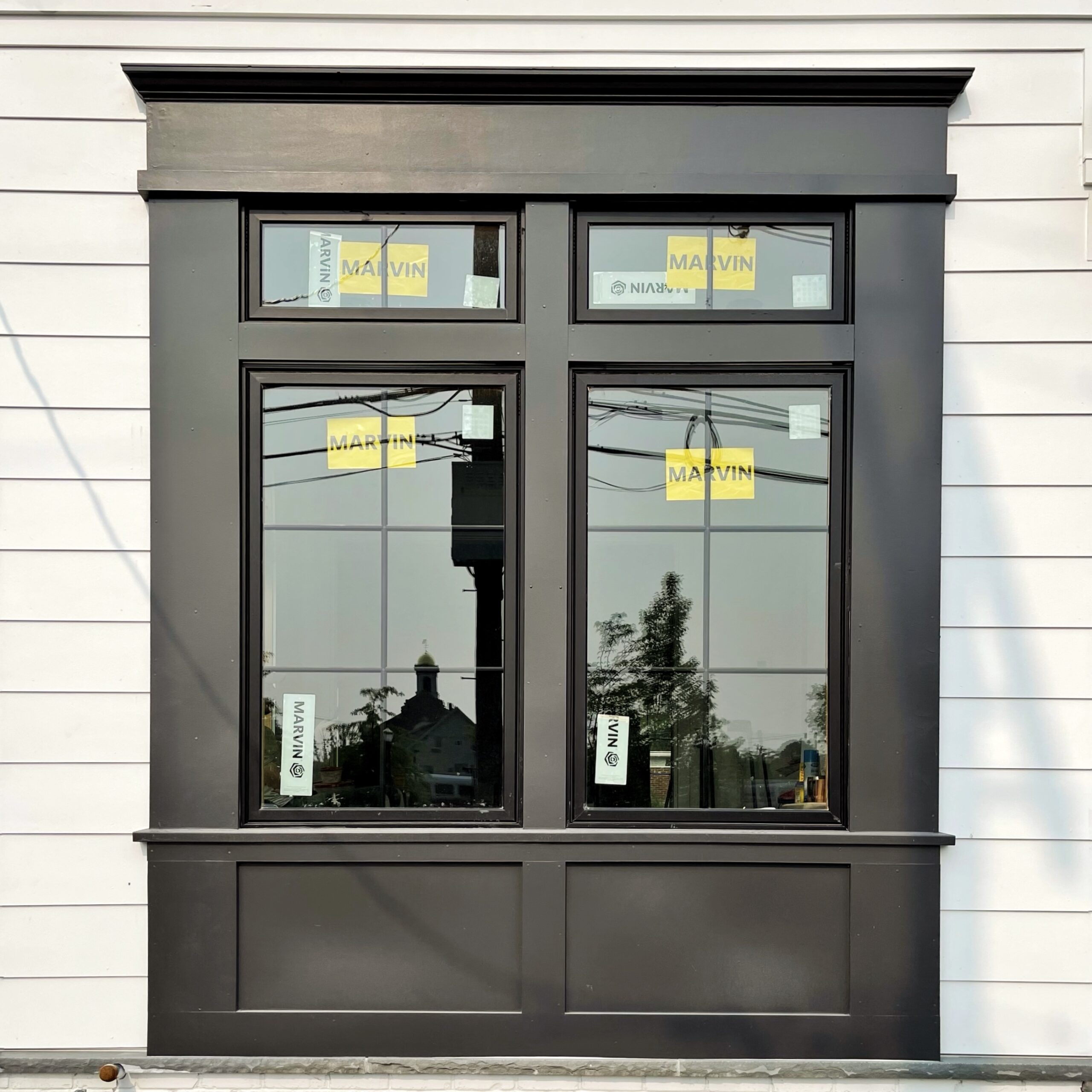
- You want a bigger window, a different style, or to turn a window into a door.
- You are re-siding the house. The siding is coming off anyway, so the full-frame premium is mostly labor you were already paying for, and the flashing ties into the new weather barrier the way it should.
- You want every bit of glass back. Full-frame uses the original opening, so the glass area matches or beats what you have.
not sure which one your house needs?
Book the free estimate. We probe the frames, tell you window by window which method is right, and put both prices in writing.
Call (508) 266-5411 Book a free estimatewhat full-frame vs insert costs installed
Our price per window is the same whichever frame material you choose, with one adjustment for the installation type: an insert replacement adds $250 per window. That covers the custom measuring to the inside of an old frame that is rarely perfectly square, then fitting, shimming, sealing and trimming the new unit to meet the existing woodwork. A full-frame installation is priced at the base rate for the window itself; the exterior trim and any siding patching around the opening are measured on site and listed as their own line on the estimate, because they depend on the wall.
National guides quote $350 to $1,050 per insert window and $700 to $1,700 per full-frame window. Those figures average in regions with lower labor rates, newer and squarer houses, and no lead-safe or historic-district steps. Our prices are complete for Massachusetts work and include the permit where one is required. See the window replacement cost in Massachusetts page for the full breakdown, and use the calculator here to price your count.
Double insulated low-E glass, installation and project management are included.
price your windows
Window pricing depends on the frame material, the installation type, the style, the glass and how many windows you are replacing. Answer a few questions for a standard, premium and deluxe range in seconds. Every project is quoted after we visit, and financing is available on every service we offer.
Request your exact quote
Your answers and estimate are already in the message. Add your details and we will schedule a free on-site visit.
the questions that decide it
Can you replace a window without replacing the frame?
Yes. That is exactly what an insert replacement is. The condition is that the frame has to be worth keeping: square, dry and solid. If it is not, the new window inherits every problem the old frame has.
Is an insert replacement cheaper than full-frame?
Per window, an insert adds $250 for the fitting work inside the old frame. A full-frame job adds exterior trim and siding patching around the opening, which is measured on site. On a house that is not being re-sided, the full-frame total is usually the higher of the two once that trim work is counted; on a house getting new siding, the difference mostly disappears. We quote both on most estimates so you can see the numbers side by side.
Do you lose glass with a pocket window?
About an inch per side, sometimes two on older frames with thick jambs. Slim-frame units such as Harvey Slimline reduce the loss. Full-frame gives the glass back.
Can an insert hide rot?
Yes, and that is the real risk. An insert covers the old sill and jambs. If they are already soft, the rot keeps going behind the new window. That is why we probe every sill before recommending an insert and decline the insert when the wood is soft.
Do I need a permit?
In Massachusetts a building permit is required for a full-frame replacement and for any change to the size of an opening. Many local building departments also require a permit for a same-size insert because the work affects the energy code, and some do not. We know which towns want which, and we file it either way. Homes built before 1978 also fall under lead-safe renovation rules, which is why the installer's license matters: Plum ProExteriors is a Massachusetts registered Home Improvement Contractor (HIC 193823), holds a Construction Supervisor License (CSL 115189) and a Lead-Safe Renovation Contractor license (LR004195), and is an Andersen Certified Contractor and a Harvey Elite dealer.
how plum proexteriors decides for your house
On the estimate we open each window, check the sill and jambs for softness, look at the casing and the wall below for water marks, and check the frame for square. Then we write the quote window by window: insert where the frame earns it, full-frame where it does not. It is common for a house to get both, inserts on the sheltered side and full-frame on the weather side where the sills have taken a beating. Windows are built to the measurements we take and arrive in four to six weeks; installation takes a few working days for a whole house, one opening at a time so the house is never open overnight.
Licensed and insured: Massachusetts HIC 193823, CSL 115189, Lead-Safe Renovation Contractor LR004195. Every estimate is free.
frequently asked questions
What is the difference between a full-frame and an insert window replacement?
An insert sets a new window inside your existing frame and keeps the sill, jambs and trim. A full-frame removes the whole window down to the rough opening, repairs and flashes it, and installs a complete new window with new trim. Insert is faster and less disruptive; full-frame fixes rot, restores full glass area and lets you change size or style.
Are pocket windows worth it?
Yes, when the frame is sound. You keep the original trim, the work is quick and the house is barely disturbed. They are not worth it on a rotted or out-of-square frame, where they cover the problem instead of fixing it.
How do I know if my frame is rotted?
Press the sill and the bottom corners of the jambs with a screwdriver. Soft wood, paint that bubbles or flakes in sheets, and stains on the wall below the window all point to water behind the frame. We check every opening during the free estimate.
Can you mix insert and full-frame on the same house?
Yes, and we often do. The windows look the same from the street; the difference is what happens inside the wall.
How long does each take?
Insert: one to two hours per window. Full-frame: four to eight hours per window plus trim and siding work. A typical whole-house job takes a few working days.
Do new windows need a permit in Massachusetts?
Full-frame replacements and any size change need a building permit. Same-size inserts need one in many towns. We file it as part of the job.
get a free window estimate
We will tell you, window by window, which ones need full-frame and which can take an insert, with a written price for each.
Call (508) 266-5411 Send the estimate form