
President at Plum ProExteriors
 08.13.2026
 13 min
 13592
13592
Board and Batten Siding in Massachusetts: Styles & Costs
Board and batten siding is a vertical profile – wide boards with narrow battens covering each seam – and in Massachusetts it works either as a full-house material or as a targeted accent on gables, dormers, and entryways.
Material choice drives both cost and upkeep: vinyl sits at the low end, fiber cement and composite at the high end, and cedar somewhere in between with the most maintenance.
This guide walks through how board and batten siding compares across materials, what it costs to install in Massachusetts, and which options make the most sense for New England’s climate and your home’s architectural style.
What Is Board And Batten Siding?
Board and batten siding is a vertical siding style made up of wide boards with narrow strips, called battens, that cover the seams between them. The boards protect the wall itself, while the battens seal the joints and help direct water away from the areas most vulnerable to moisture. It’s a simple design that’s been used for centuries because it works.
The style first became popular on barns and farmhouses in North America during the 19th century, which is why the barn siding nickname stuck around. Its straightforward construction and weather resistance made it a practical choice. Today, it’s just as common on modern homes as it is on traditional ones, giving exteriors a clean, vertical look that works with everything from farmhouses to contemporary designs.
In Massachusetts, board and batten siding is often used across the entire exterior or as an accent on gables, dormers, and entryways. The vertical lines can make a home appear taller, while the profile performs well in New England’s wet, windy climate when it’s installed with proper flashing and moisture management.
Board and Batten vs. Reverse Board and Batten
You may often come across the term reverse board and batten. Traditional board and batten siding places wide boards on the surface with narrow battens covering the seams between them. The battens create subtle shadow lines while protecting the joints from moisture.
Reverse board and batten siding uses the same basic concept but changes the appearance. The wide boards are recessed, making the battens the most prominent feature. This creates deeper shadow lines and a more modern, architectural look.
Once you understand the basic profile, the next step is choosing the right material, one that fits your budget, maintenance expectations, and Massachusetts’ climate.
Board and Batten Siding Materials Compared
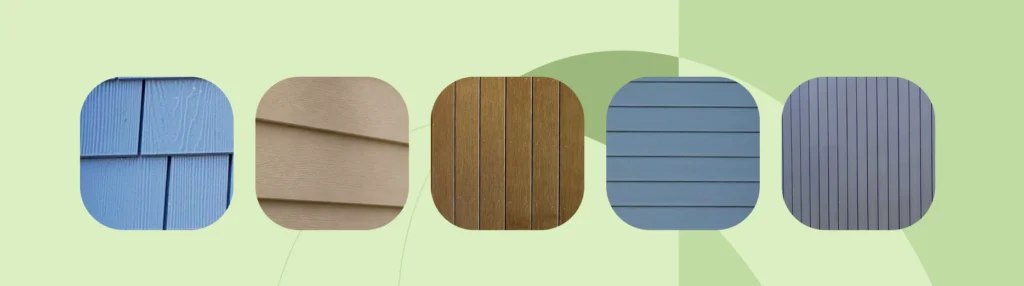
Massachusetts weather sorts five siding materials pretty quickly. Between freeze-thaw cycles, humidity, and heavy snow load, some materials hold up for decades while others need constant attention. Fiber cement, vinyl, wood, composite, and metal all handle board and batten differently when it comes to durability, maintenance, and cost – here’s how they compare for New England homes.
Fiber Cement Board and Batten Siding
James Hardie fiber cement panels are the standout choice for durability in this climate. The HZ5 formulation is engineered specifically for harsh, freeze-thaw-prone regions like New England, so panels stay dimensionally stable through winter instead of expanding, contracting, or cracking. Painted finishes hold their color well and typically don’t need repainting for a decade or more.
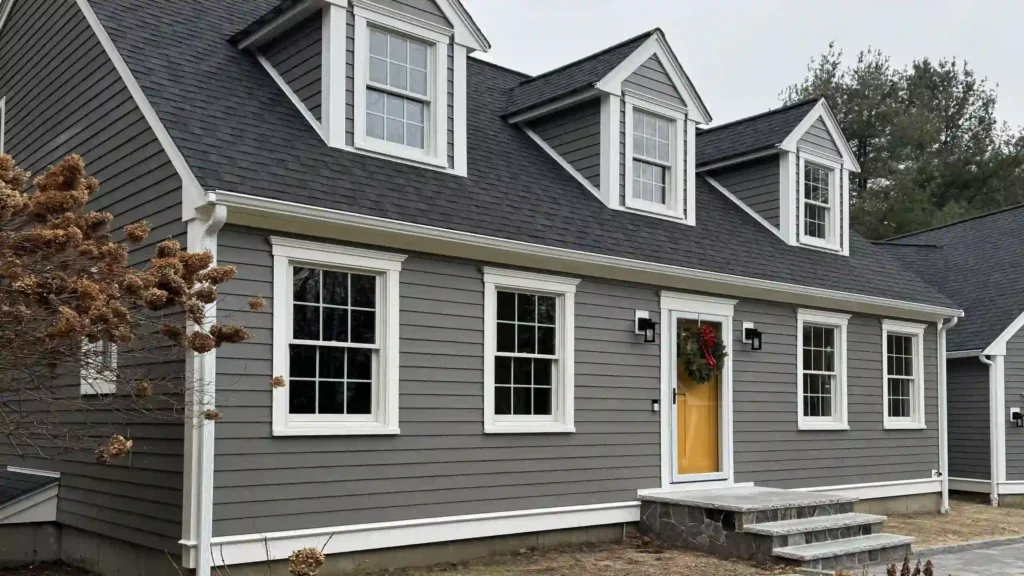
A well-executed full-house install in a finish like Iron Gray shows how well the material performs in this exact climate, with crisp panel lines and a finish that holds up through multiple New England winters.
Vinyl Board and Batten Siding
Vinyl is the budget-friendly option, and board-and-batten vinyl siding panels have gotten better at mimicking the classic look without the classic price tag. Because vinyl expands and contracts more with temperature swings than fiber cement, it’s better suited to accents, additions, or tighter-budget projects than full-house installs in extreme climates.
Insulated vinyl panel systems can offset some of that movement and add a bit of energy efficiency. However, overall it still sits a tier below fiber cement for long-term durability. Upkeep is minimal – mostly rinsing off dirt and pollen – which makes it appealing for homeowners who want low-maintenance without the higher upfront cost.
Wood Board and Batten Siding
Cedar and pine board and batten deliver the traditional, historic character that many homeowners want, especially on older New England homes. The tradeoff is moisture: wood absorbs it readily, and between regional humidity and heavy snow exposure, that means sealing and repainting every few years to prevent rot, warping, or insect damage. It’s a strong fit for homeowners prioritizing authentic historic character who are willing to keep up with the maintenance schedule.
Composite, Metal Board, and Batten Options
Composite panels, like TruExterior and LP SmartSide, offer a middle ground – good stability and low upkeep, similar to fiber cement. Still, they’re most commonly used on accent facades rather than full exteriors.
Metal board-and-batten siding is the outlier: very low maintenance and stable in all weather, but its clean, modern look tends to suit contemporary or commercial-style builds better than traditional New England homes, so it also shows up mostly as an accent choice rather than a full-house material.
Vertical Board And Batten Styles for MA Homes
Sizing mostly comes down to a ratio. Most vertical board-and-batten siding uses 1×3 or 1×4 battens over boards 8 to 12 inches wide, which keeps the batten-to-board relationship around 1:3 or 1:4. Wider spacing reads calmer; tighter spacing reads busier.
Cape Cod homes tend to look best with narrower battens and moderate board widths, usually in muted tones with white trim. The house is already low and wide, so you don’t want a heavy vertical rhythm fighting the roofline.
Farmhouse-style homes are the natural fit here. Twelve-inch boards with 1×4 battens give the deep shadow lines people picture when they think of this profile, and the taller the wall, the better it tends to look.
A center-entrance Colonial in Wellesley or Needham is a different case – full-facade vertical siding rarely suits one. Battens on the gable ends or a dormer, with clapboard on the main body, give dimension without arguing with the symmetry – more on siding ideas for Colonial-style homes.
Contemporary builds go the other direction: tight, uniform battens on narrower boards, minimal trim, dark color. Clean and graphic.
If you’re still weighing orientation itself, this vertical vs horizontal siding comparison covers the tradeoffs. Sizing sets the rhythm, but color is what most homeowners notice first when they picture the finished house.
Board and Batten Siding Colors That Work in New England
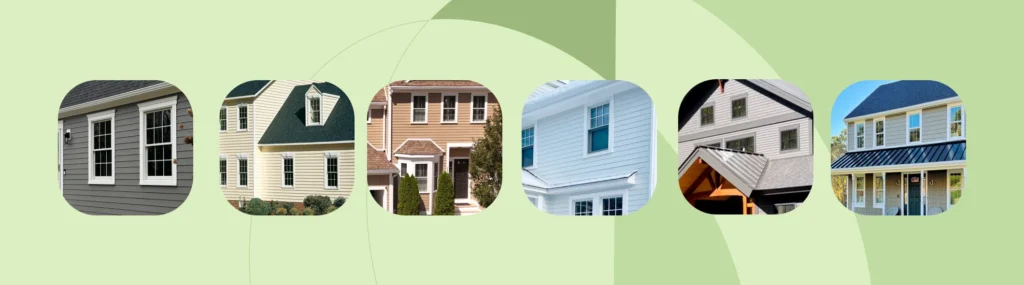
Board-and-batten siding colors that hold up here tend to be neutrals with some depth. Iron Gray is the workhorse – a deep charcoal that reads modern against Arctic White trim and doesn’t show road grit after a Route 9 winter. Pearl Gray goes softer: a light, adaptable neutral that suits traditional and transitional homes alike.
Navajo Beige is the warm choice, a sandy tone that flatters shingled Capes around Framingham or Wayland.
White board-and-batten siding is a popular choice for farmhouse designs. With black trim and black windows, it’s crisp. It shows pollen, though, so plan on rinsing the north elevation each spring.
Want something less common? Mesa Green, Deep Ocean, Awning Blue, and Woodstock Brown work well as gable, dormer, or entry accents.
Factory-baked finishes hold color better than field-applied paint, so colors chosen from a manufacturer’s line tend to age more evenly. And look at your samples on your house at 4 p.m. in February – flat winter light drains the warmth out of everything, and white board and batten siding can read gray in that light.
Color decisions get easier once you know what the project costs, so let’s break that down.
Board and Batten Siding Cost in Massachusetts
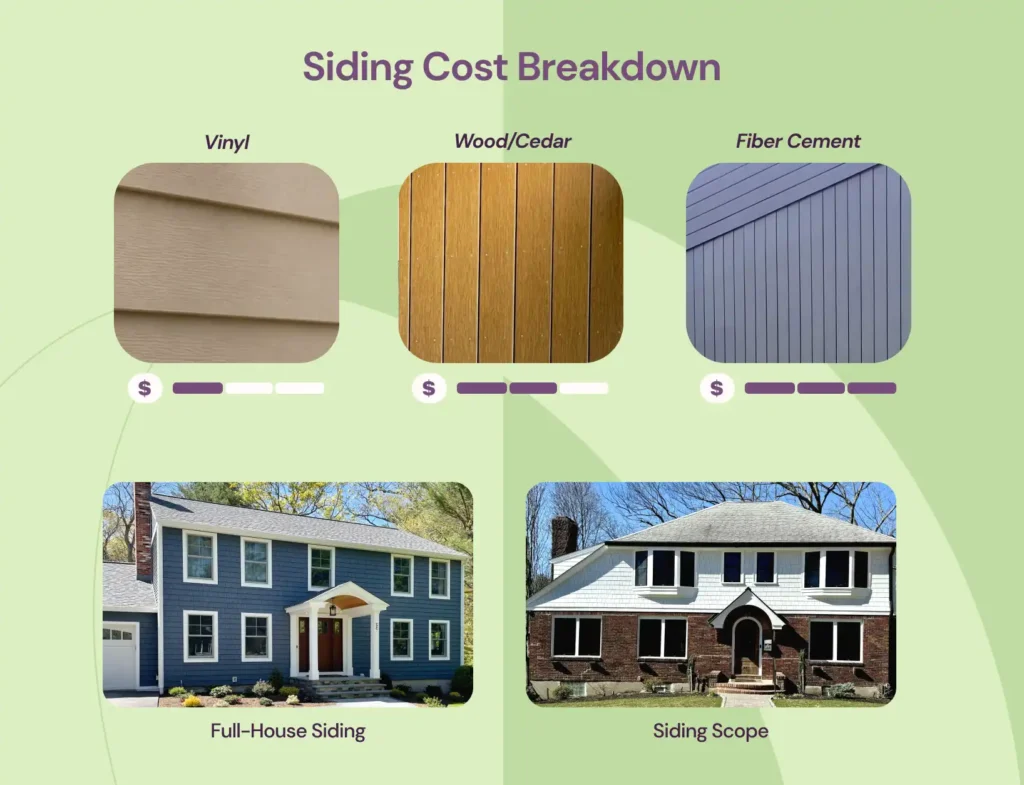
Plan on a wide range per square foot installed, depending heavily on material choice.
project cost = exterior wall square footage × installed price per square foot
(note: wall square footage is not the same as a home’s total finished square footage – a contractor measures the actual wall area to quote a project)]
Vinyl is the cheapest option installed in Massachusetts – lighter panels, faster install, no repainting. Fiber cement tops out: James Hardie board and batten runs $35 to $45 per square foot installed – materials, labor, trim, fasteners, weather barrier, tear-off.
Cedar and pine cost mid-range but climb with staining every few years. Composite prices near fiber cement.
Then there’s scope. Is your board-and-batten siding cost driven by the whole house, or just one gable? An accent dormer runs a few thousand dollars; full-facade fiber cement on a 2,000-square-foot colonial runs $69,000 to $89,000 installed.
Want line-by-line numbers? This detailed board-and-batten siding cost breakdown covers every variable. Contact Plum Pro for a free estimate.
Full House vs. Accent Board and Batten Applications
You don’t have to commit the whole house. Full-home applications suit farmhouse and contemporary builds; many Massachusetts homeowners prefer a targeted accent instead.
Gable accents are among the most common requests: vertical battens contrast with the body below and pull the eye upward. James Hardie recommends board and batten on gable ends and entryways.
Shed dormers on Capes and colonials work the same way. Entryway accents frame the door with slim battens in charcoal or navy over stone. Feature walls: bump-outs, chimney columns, garage facades. All add dimension without full-house pricing.
Most projects mix board and batten with horizontal lap siding: lap on the body, vertical on accents, trim marking the transitions. Mixing the two works well when your rooflines already vary. If your rooflines already vary, yes – see more modern siding style ideas.
One detail worth borrowing for your own house: pick one dark tone and repeat it across the exterior. Siding, window frames, gutters, and downspouts in the same dark tone read as a single, deliberate look, while lighter trim at the corners and window surrounds keeps those dark elements from reading as one heavy mass. It’s a simple coordination trick that works whether you’re doing a full-house install or just a gable accent.
How well the siding is actually installed matters just as much as which material and color are chosen.
Installation Quality: What to Expect from Your Contractor
Good board-and-batten siding usually fails for boring reasons. Not the material – the details behind it.
Start with the wall itself. Sheathing gets checked for rot, then a water-resistive barrier goes on per local code, integrated with flashing at every window, door, and penetration. Skip that step and moisture gets behind the battens, where you won’t see it until the sheathing has gone soft. Sealed joints and flashing come next. Z-flashing at horizontal joints, sealant where trim meets siding, proper clearances at grade and roof lines.
Then manufacturer-compliant fastening: corrosion-resistant nails, correct edge distances, heads set snug and never over-driven. A gun set too hot will crush the board and void a warranty.
Ask this before you sign: is your contractor registered as a Home Improvement Contractor in Massachusetts, and are they carrying general liability and workers’ comp? A Weston homeowner has every right to ask for both. Manufacturer-certified installation, like the James Hardie Contractor Alliance, adds another layer of confidence. Expect a transparent proposal and a final inspection walkthrough.
These are the same standards Plum ProExteriors holds itself to on every Massachusetts board-and-batten project it takes on.
What We’ve Seen Work on Massachusetts Board and Batten Installs
Patterns tend to repeat across projects. Plum ProExteriors has completed 500+ exterior jobs, and the board-and-batten siding that still looks sharp a decade later usually shares the same three details.
Batten spacing first. On two-story walls, wider boards with proportionally sized battens carry the scale; narrower spacing on a single-story ranch tends to settle the proportions down. Too-wide spacing on a short wall looks stretched.
Fastening is where winters expose shortcuts. Corrosion-resistant nails, stainless closer to the water in towns like Scituate, heads set snug – never sunk through the face. Then clearance at grade, because plowed snow piles against a wall for weeks here and wicking is a real risk.
Color pairings? Darker tones like Iron Gray and Deep Ocean hold up better on south-facing elevations with factory-baked finishes than field paint typically does. Lighter neutrals hide pollen and road film more forgivingly.
One more thing worth your attention: check the accent gable after the first spring thaw. If your caulk joints opened up, you’ll want them addressed early. That hands-on experience shapes the recommendations below for anyone weighing options on their own house.
Bringing It All Together
Board and batten siding earns its place on Massachusetts homes because it does two jobs at once: it sheds water at the seams, and it gives a flat, low-slung facade some height. Pick the material for your climate exposure first, the batten spacing for your wall height second, and the color last.
The whole-house-vs-gable decision often comes down to roofline variety – a shed dormer, a bump-out, a split-level – an accent usually does more for the elevation than a full wrap, and it costs a fraction as much.
Whatever you choose, the install details decide how it ages. Moisture barrier integrated with flashing, sealed joints, correct fastening, clearance at grade. Those aren’t glamorous, but they’re what stands up to twenty New England winters.
Curious what these profiles look like on real homes? The exterior project photo gallery shows completed siding work across Massachusetts. More material comparisons and seasonal maintenance guides live on the Plum Pro blog.
Ready for numbers on your own house? Call or contact Plum Pro today to get a free estimate on your exterior project.
FAQs
1. What is the difference between board and batten and shiplap siding?
Board and batten runs vertically – wide boards with narrow battens covering each seam. Shiplap boards typically run horizontally and overlap each other directly, with no cover strips, though they can also be installed vertically — we offer James Hardie Artisan V-groove shiplap in a vertical orientation as well. They have very different textures, and they suit different architectural styles.
2. Is board and batten siding more expensive than traditional lap siding?
Usually a bit more, since you’re paying for extra batten material and the labor to install it. Vinyl board and batten stays close to standard lap vinyl pricing. Fiber cement is at the higher end of the installed cost range for board-and-batten siding.
3. Can board and batten siding be installed over existing siding?
Generally not recommended. You want the old siding off so the sheathing and moisture barrier can be inspected. Furring strips are sometimes used, but they change window and trim depth – have a contractor look at conditions first.
4. What is reverse board and batten siding?
It recesses the wide boards and leaves the narrow battens sitting proud on the surface. The shadow lines land differently than traditional board and batten. You’ll see it most often on modern accent walls.
5. How long does board and batten siding last in New England weather?
Fiber cement can go 50 years or more with repainting every 10 to 15 years. Wood needs sealing or repainting every 3 to 7 years given our humidity and snow. Vinyl typically holds up for a couple of decades but gets brittle in deep cold.
5. What are the best board-and-batten siding colors for Massachusetts homes?
Iron Gray and Pearl Gray read well against fall foliage and winter snow. Navajo Beige and Woodstock Brown suit Colonials and traditional homes. White is still the farmhouse standard – plan on rinsing pollen off each spring.