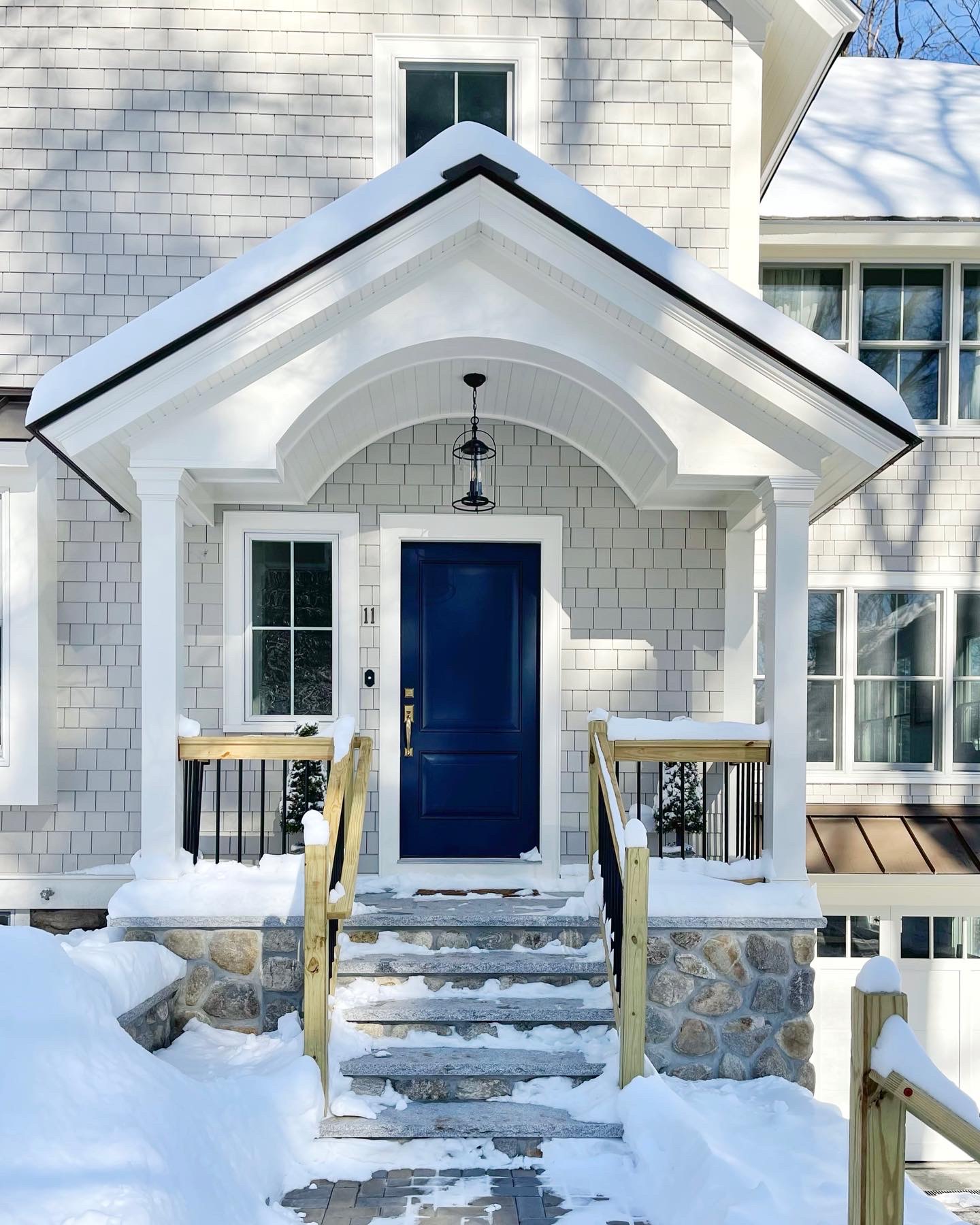
energy efficient entry doors
A front door is a small piece of the wall, but on a cold morning it is the piece you feel. An uninsulated wood door with tired weatherstripping lets heat out around all four edges and straight through the panel. A modern insulated door, installed and sealed properly, closes that gap. This guide explains what makes an entry door energy efficient, what the labels mean, and what matters most in a Massachusetts winter.
price your door in seconds
Answer four quick questions and see a standard, premium and deluxe range. No email needed to see the price.
our achievements







 ★★★★★5/5 · 170+ reviews
 ★★★★★5/5
 ★★★★★5/5
 ★★★★★5/5
 ★★★★★5/5
 ★★★★★5/5
 ★★★★★5/5
a foam core, good glass and a tight seal
The most energy efficient entry doors are fiberglass or steel doors with a polyurethane foam core, a thermal break, insulated low-E glass if there is glass at all, and a tight seal: compression or magnetic weatherstripping, a bottom sweep and an adjustable sill. Look for the ENERGY STAR label and a low U-factor on the NFRC sticker. Then make sure the door is installed square and sealed to the framing, because the best door leaks if the installation does not.

what a new door costs
Door pricing depends on the style, the frame material and the glass. Answer four quick questions for a standard, premium and deluxe range. Every project is quoted after we measure the opening, and financing is available on every service we offer.
Request your exact quote
Your answers and estimate are already in the message. Add your details and we will schedule a free on-site visit.
what makes a door energy efficient
The four parts of the door that decide how it performs. Scroll through them.
The core
Solid wood insulates poorly for its thickness. Fiberglass and steel doors are built as a skin around a polyurethane foam core, which gives them several times the insulating value of a solid wood door. Steel doors need a thermal break, a strip of non-metal material separating the inside and outside skins, so the steel does not carry cold straight through.
The glass
Glass is the weakest part of any door for insulation, so the amount and the kind matter. A door with no glass insulates best. If you want light, choose insulated double-pane glass with a low-E coating and an argon fill, and consider sidelights or a transom instead of a large lite in the door itself. Decorative glass with lead came is attractive but usually insulates less than clear insulated glass.
The seals
Heat leaves a door mostly around its edges. Compression weatherstripping on fiberglass doors and magnetic weatherstripping on steel doors seal the way a refrigerator does. A bottom sweep and an adjustable sill let the door seal against the threshold year after year as the house moves. A composite or rot-resistant jamb bottom keeps the frame from taking on water and opening the seal.
The ratings
The NFRC label on a new door lists its U-factor, which measures how much heat passes through the whole unit. Lower is better. Opaque doors have the lowest U-factors, doors with partial glass sit in the middle, and full-glass doors are highest. ENERGY STAR certifies doors that meet thresholds for U-factor and, for glazed doors, solar heat gain, so the label is a quick way to compare.
The installation
An insulated door in a leaky frame is a leaky door. The difference between a good and a poor installation is in the parts you do not see: a level sill pan, low-expansion foam or backer rod in the gap between the frame and the framing, flashing tape at the sill and jambs, and a door hung square so the weatherstripping compresses evenly on all three sides. Most of the drafts we are asked to fix on newer doors are installation problems, not door problems.
fiberglass, steel or wood
Fiberglass
Our most common recommendation for Massachusetts homes. A foam core, a skin that does not dent or rust, a finish that holds for years, and a wood-grain option that looks like a stained wood door from the sidewalk. ProVia fiberglass doors are the line we install most, with a lifetime manufacturer warranty.
Steel
Insulates as well as fiberglass and costs less. Steel doors are secure and smooth to paint. They dent, and a scratch that reaches the metal can rust, so they suit entries that are sheltered by a porch or a storm door.
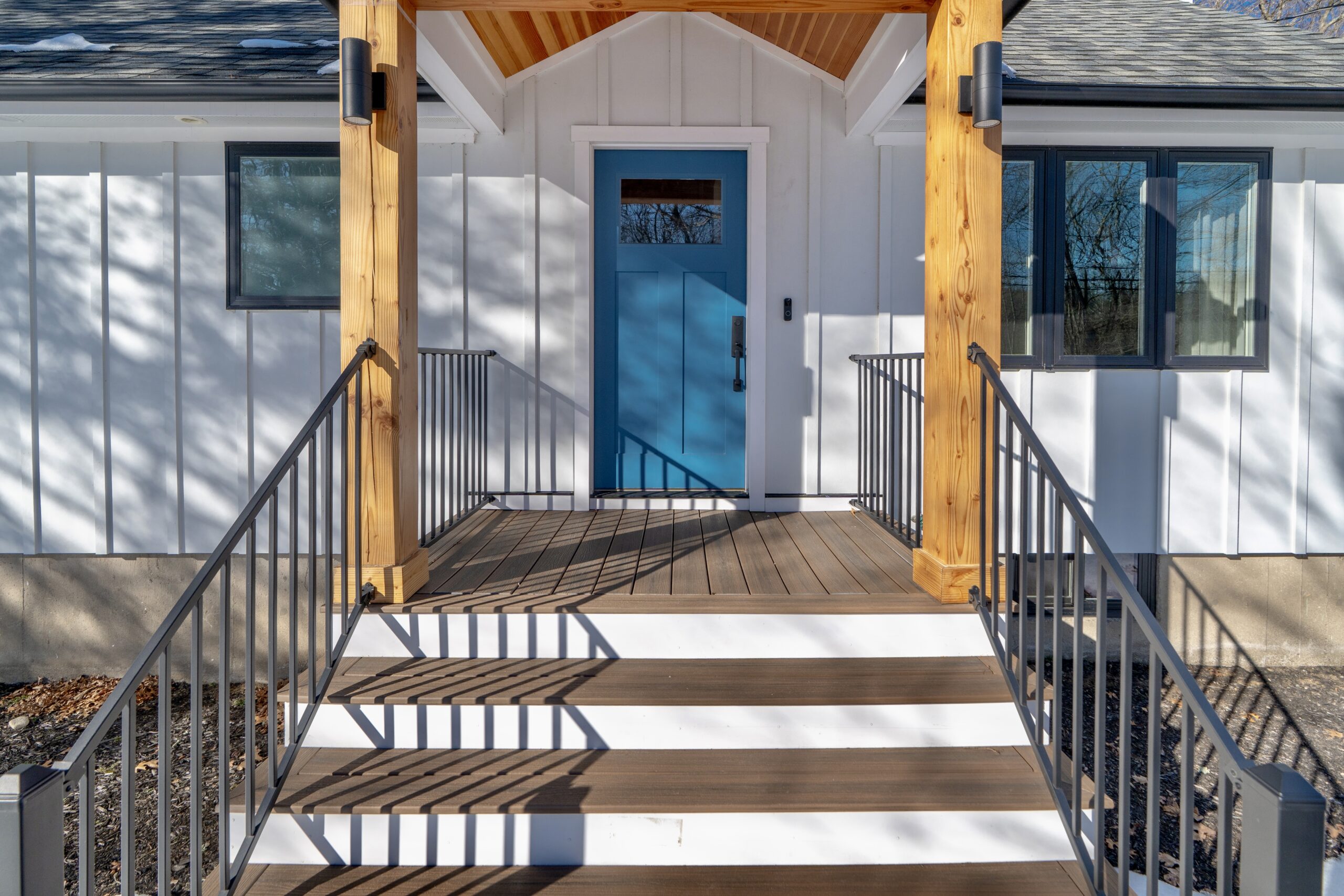
Wood
Beautiful, and the right choice on some historic homes, but a solid wood door insulates far less than a foam-core door and needs refinishing to stay sealed. Some manufacturers make wood doors with an insulated core, which narrows the gap.
what an energy efficient entry door costs
Single entry door
Fiberglass, in a new insulated frame
- Standard
- $4,830
- Premium
- $5,445
- Deluxe
- $6,312
Entry with sidelights
One sidelight; two sidelights from $9,860
- Standard
- $6,280
- Premium
- $7,860
- Deluxe
- $8,820
Patio doors
Gliding from $8,860; French from $13,860
- Standard
- $8,860
- Premium
- $9,770
- Deluxe
- $10,950
Storm doors and older homes
A storm door adds a second layer of glass and a pocket of still air, which helps on a recessed or north-facing entry. On a dark door in full afternoon sun it can trap heat and damage the finish or warp the door, and many door manufacturers limit their warranty in that situation. We match the storm door to the door, or recommend skipping it. Many houses around Wellesley, Newton and Needham have original or decades-old wood doors in frames that have settled. Replacing the door alone rarely solves the draft, because the frame is the problem. A new prehung unit, set square in a repaired opening with a new sill, is what makes the front hall comfortable. The calculator above gives a planning range; the free estimate turns it into a measured quote.
is your current door the problem?
Feel for drafts at the edges and the threshold, look for light around the door, and press the bottom rail and the jamb for soft spots. Our guide to the signs you need a new front door walks through each one. If the door is the problem, see our front door cost guide and our fiberglass vs steel comparison.
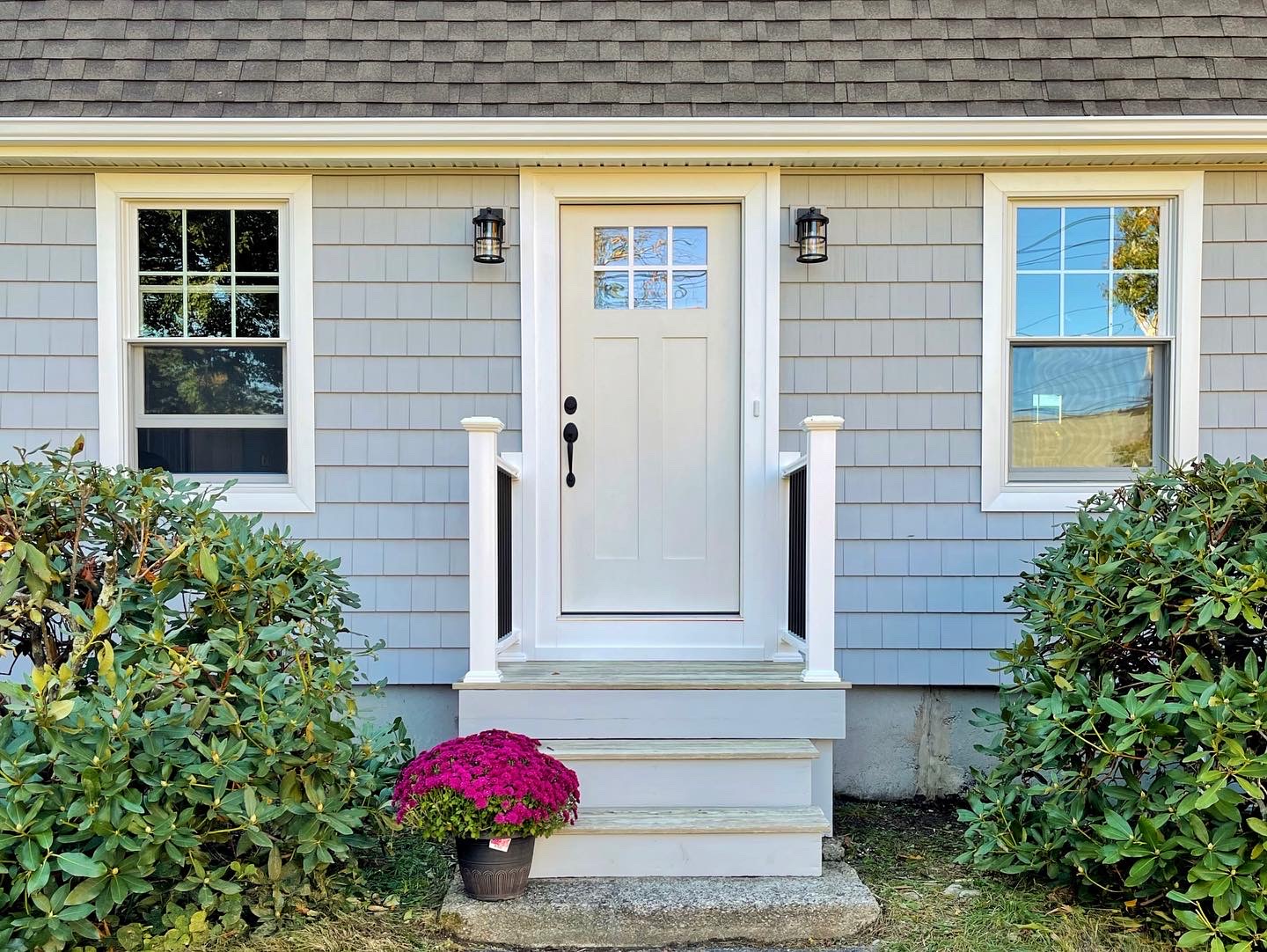
how plum proexteriors installs a door
We measure the opening, check the sill and the framing, and set the new prehung unit on a sill pan, level and plumb, with the gap foamed and the jambs taped before the trim goes on. You get a written quote that lists the door, the installation and any repairs. ProVia doors carry a lifetime manufacturer warranty plus three years of labor coverage from Plum ProExteriors, and financing is available.
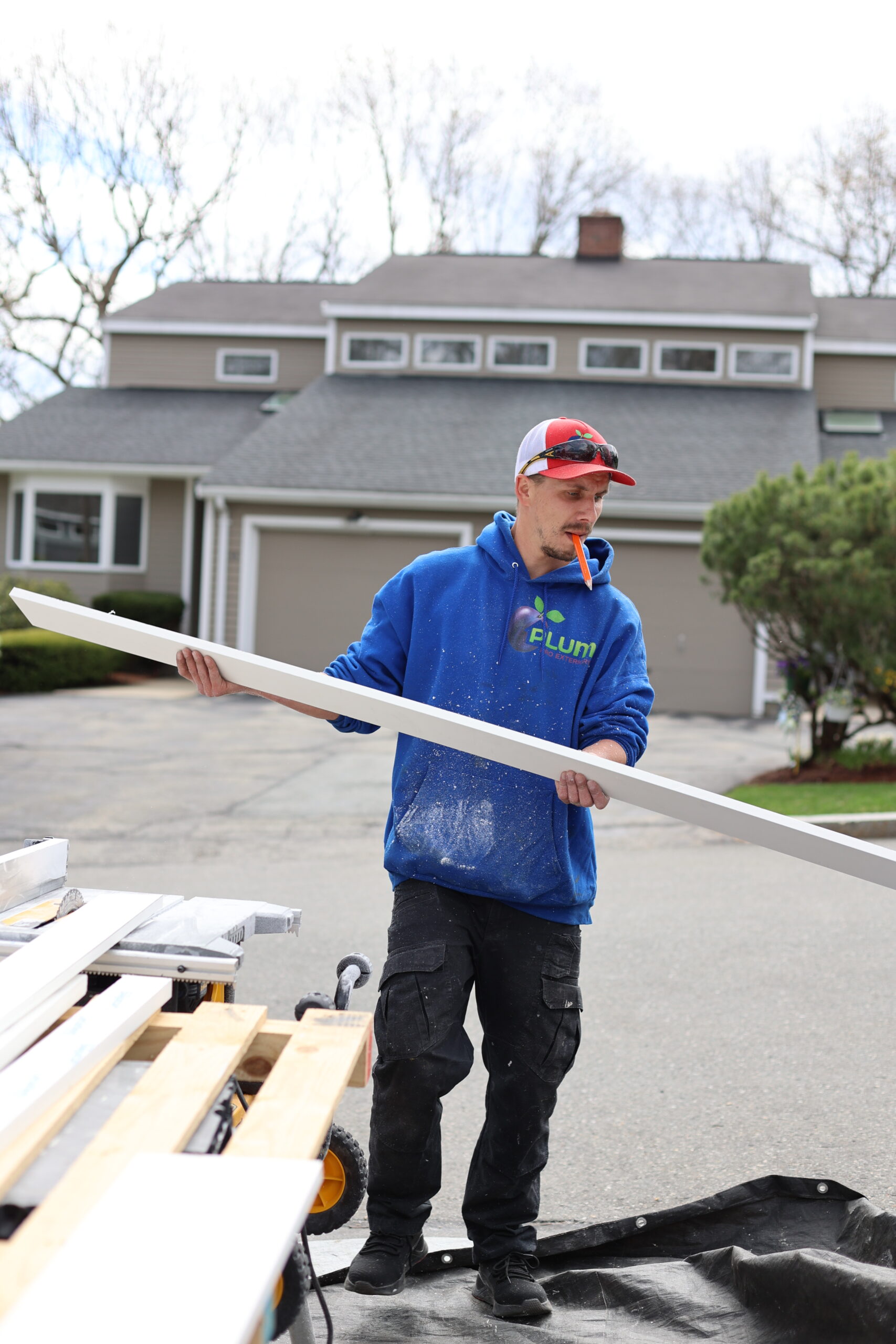

what our clients say
The owner is on site for every project, and when the job is done he asks every client the same question on camera: what do you think? These are their answers, at their own homes.
 Tap to play
 Tap to play
 Tap to play
 Tap to play
 Tap to play
 Tap to play
 Tap to play
 Tap to play
 Tap to play
entry doors we have installed
frequently asked questions
What is the most energy efficient type of entry door?
A fiberglass or steel door with a polyurethane foam core and no glass, in a frame with compression weatherstripping and an adjustable sill. Add low-E insulated glass if you want light.
Is fiberglass or steel more energy efficient?
They are close. Both use a foam core. Steel needs a thermal break to stop cold transfer at the edges, and fiberglass holds its seal and finish longer, so in practice fiberglass tends to perform better over the life of the door.
Does a glass door insert hurt efficiency?
Some. The smaller the glass and the better its coating, the less heat it passes. Half-lite doors with low-E insulated glass are a good balance of light and insulation.
Will a new front door lower my heating bill?
It will stop a draft you can feel and improve comfort in the front rooms. On most homes the savings in dollars are modest, because the door is a small part of the envelope. Comfort, security and curb appeal are the bigger reasons.
Are there rebates for energy efficient doors?
Programs change. Ask us during the estimate about any current incentive that applies to your door.
How much does an energy efficient entry door cost?
A single insulated entry door starts at $4,830 installed, with sidelights and triple glass as add-ons. Use the calculator on this page, then book a free estimate.
book a free door estimate
Call us or send the estimate form. We will look at the door and the frame, show you door samples, and give you a written quote.
Call (508) 266-5411 Send the estimate form