
President at Plum ProExteriors
 08.20.2026
 9 min
9 min
 13754
13754
Wood-Look Vinyl Siding: Best Options for Massachusetts Homes
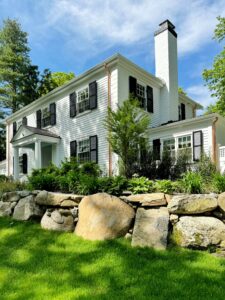
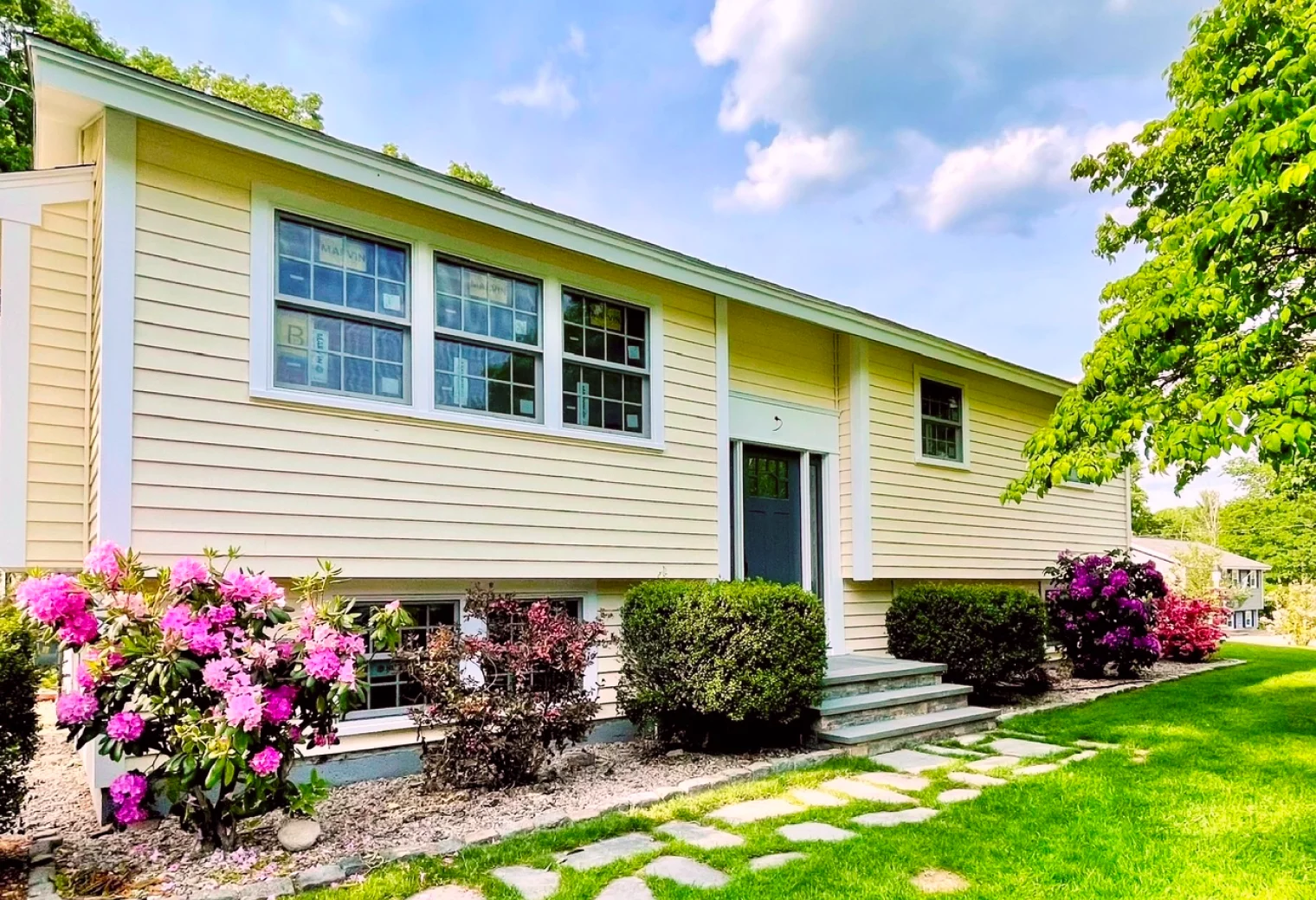
Wood-look vinyl siding is a plastic material embossed with a wood-grain texture at the factory. For most Massachusetts homes, it’s one of the lowest-maintenance ways to achieve the look of cedar shake or clapboard without the need for regular repainting. The best options depend on the home’s architecture and exposure. Still, common choices include deep-embossed shake profiles for coastal Capes, tight-exposure clapboard for Colonials, and board-and-batten for farmhouse-style builds.
Plum ProExteriors works on siding across Wellesley, the South Shore, and MetroWest, where humid summers and repeated freeze-thaw cycles can expose weaknesses in installation, moisture management, and material selection.
So is vinyl the right call for your house, or should you be looking at fiber cement? Start with how these panels are actually made.
What Is Wood-Look Vinyl Siding?
Wood-look vinyl siding is a plastic material embossed with a wood-grain pattern during manufacturing. A heated die presses ridges, grooves, and knot lines into the panel surface, so what starts as flat plastic ends up carrying the texture of milled cedar or pine. Deeper embossing catches light and casts small shadows, which helps create a more convincing wood appearance from the street.
How do you make vinyl siding look like wood after it’s installed? You can’t, really – the vinyl siding wood look is baked in at the factory, along with the color. That’s the practical appeal for anyone who’s watched real clapboards on a shaded north wall weather, absorb moisture, or require repeated refinishing over time.
Wood-grain vinyl doesn’t rot and doesn’t need scraping and repainting on the recurring schedule real wood requires. A garden hose in spring handles most of the upkeep, which is why it shows up so often in our vinyl siding services.
Once you understand how the wood-grain effect is created, the next question is which profile style best fits a New England home.
Popular wood-look vinyl siding styles for New England
Several wood-look profiles work especially well with New England architecture.
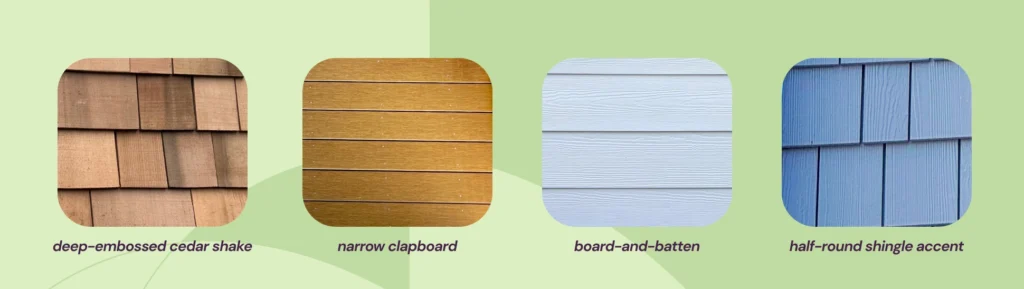
Cedar shake and shingle come first: hand-split and D7 panels throw deep shadow lines, suiting Cape Cod cottages and Craftsman exteriors, while half-round shingles accent Victorian gables. Shake-style vinyl is a common choice for homeowners who want more texture than standard clapboard offers.
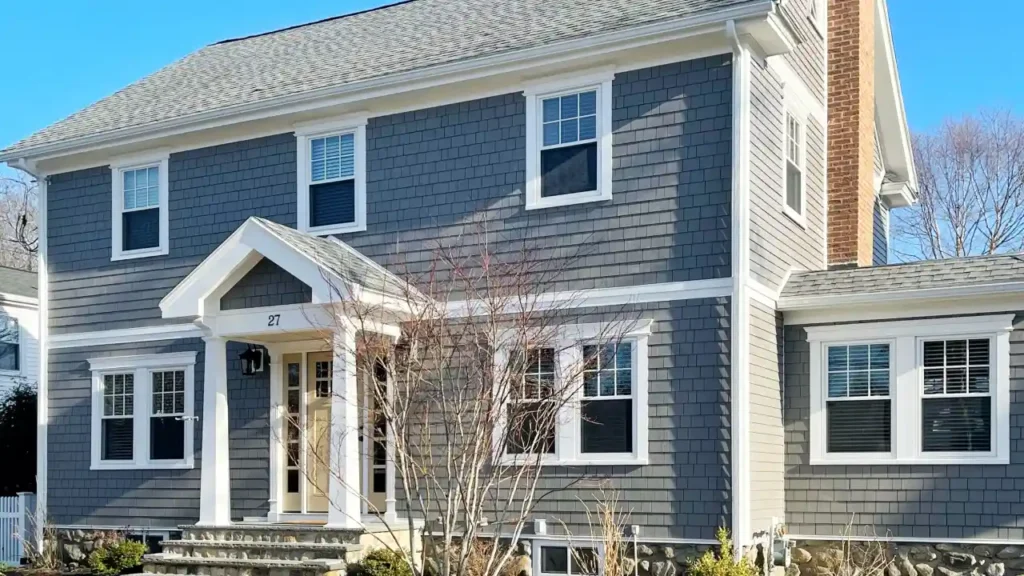
Clapboard is smoother and more linear. Narrow exposures keep the horizontal rhythm that defines Colonials – if you’re weighing colonial house siding ideas, most homeowners land here.
Board-and-batten is a popular vertical option for farmhouse-inspired and transitional exteriors: wide boards, narrow battens, barn-inspired.
Vertical wood-look vinyl siding works as a full facade or a gable accent, with panel layout and trim details affecting how visible the seams are. Rustic wood-look vinyl siding features heavier wood-grain textures for farmhouse builds. Pair it with dark trim, and the added shadow and contrast can make the siding read more like painted or stained wood from a distance.
Style aside, let’s compare vinyl against wood and fiber cement.
Vinyl vs. Wood, Fiber Cement, and Composite Siding
Vinyl needs no scraping; painting vinyl siding is optional and should only be done with products and colors approved by the siding manufacturer.
Fiber cement resists moisture and temperature changes well when installed and detailed correctly. Real wood requires ongoing coating and moisture management to reduce the risk of decay.
Which suits your house? See historic siding guidance on embossed panels.
In a Wellesley or Newton historic district? Check siding options for historic homes.
| Attribute | Vinyl | Fiber cement | Real wood | Composite |
|---|---|---|---|---|
| Maintenance | Lowest, rinse only | Modern, periodic repainting | Highest – scrape, prime, repaint | Low to moderate |
| Wood-like appearance | Good, product-dependent | Very convincing on textured profiles | Authentic | Strong, product-dependent |
| Response to temperature/moisture | Expands and contracts | Dimensionally stable | Can swell, shrink, and warp | Generally stable |
| Historic district fit | Varies by local rules | Varies by local rules | Often compatible | Varies by local rules |
| Relative cost | Lowest | Mid to high | High | High |
Cost of Wood-Look Vinyl Siding in Massachusetts
Full siding replacement costs vary with the home’s size, siding profile, material tier, access, trim, and prep work. For a 2,000-square-foot project, a realistic planning range is about $39,000 for a standard option, $43,000 for a premium option, and up to $63,000 for deluxe materials and finishes. These installed estimates include both materials and labor, but the final price depends on the actual exterior wall area and project scope.
Why such a wide spread? Home size drives it first, then the siding profile and installation complexity. Flat clapboard panels are generally quicker to install than detailed shake-style profiles, while dormers, multiple stories, difficult access, extensive trim, or underlying wall repairs can push the total higher.
The rough math looks like this:
total project cost = actual siding wall area × installed price per sq ft
The installed rate already accounts for materials and labor, while the final quote reflects project-specific factors such as removal, prep work, trim, access, and any repairs discovered during installation.
Insulated panels sit at the higher end and may add some exterior insulation while reducing thermal bridging. Deep-embossed shake profiles and other premium wood-look styles can also cost more than basic smooth clapboard.
Choosing the Right Style for Your MA Home
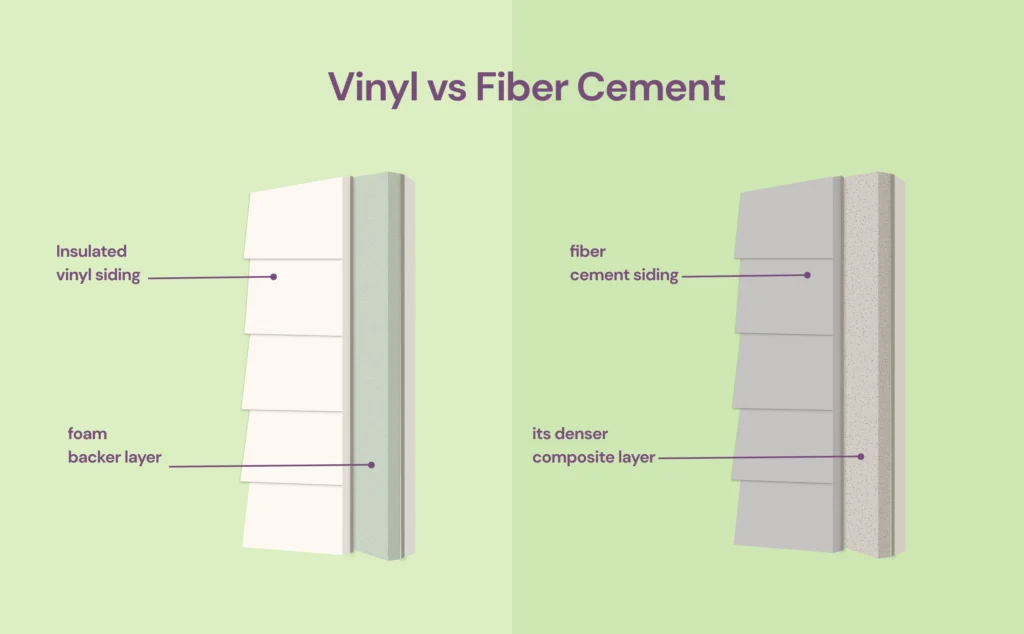
Insulated vinyl siding’s foam backer can reduce thermal bridging through wall framing and add some insulating value to the wall assembly. Whether the upgrade is worth the added cost depends on the existing insulation, wall construction, energy goals, and project budget.
| Attribute | Insulated vinyl | Standard vinyl | Fiber cement |
|---|---|---|---|
| Added insulation | Foam backing adds some exterior R-value | Little added insulation | Little added insulation from the siding itself |
| Wood-grain appearance | Good | Good | Excellent |
| Upfront cost | Higher | Lowest | Highest |
For homes in historic districts, check the applicable local design guidelines before selecting a material. Approval may depend on the specific building, elevation, siding profile, exposure, trim, and district rules.
On Colonials, match the clapboard exposure and proportions to the architecture and, where appropriate, the home’s existing or historic siding pattern. Natural wood-look vinyl siding grain won’t compensate for a profile that looks out of scale with the house.
Weighing vinyl wood-look siding? Read how to choose the best siding material.
Free estimate? Contact Plum Pro about insulated vinyl siding options.
What We’ve Seen Work on Massachusetts Homes
Patterns show up after enough projects. On coastal properties – think Scituate, Marshfield, anywhere the salt air and wind-driven rain hit a wall broadside – deep-embossed shake profiles can create stronger shadow lines and a more dimensional appearance than flatter panels. Durability, however, depends on the product, installation, exposure, and maintenance rather than embossing depth alone.
Inland, traditional clapboard profiles often complement Colonials and Capes because their horizontal proportions echo the siding styles commonly associated with those homes. The right exposure still depends on the individual facade.
Does insulated vinyl actually earn the upcharge here? Plum ProExteriors’ project experience says yes for most homeowners – the foam backer smooths out cold spots along stud lines, and that’s a difference you feel in a February kitchen, not just on a bill.
One common mistake worth avoiding: choosing natural wood-look vinyl siding based on a 2-inch sample chip. Ask for a full panel and set it against your house in daylight instead. Vinyl wood-look siding changes character depending on sun exposure, trim color, and roof tone, and you want to see that before the order goes in.
Final thoughts for Massachusetts Homeowners
Wood-look vinyl siding earns its place on plenty of New England homes – the ones where you want cedar-shake character without the recurring repainting cycle that real wood requires. It won’t fool anyone standing three feet away, and homes within historic districts may face additional material and design restrictions, so local approval should be checked before a product is ordered. That’s fine. Knowing where a material works is more useful than pretending it works everywhere.
Match the profile to the architecture first, then decide on insulation. On a Cape or Colonial, a siding profile that respects the home’s existing proportions will usually look more convincing than one chosen solely for grain texture.
Have you actually seen a full panel against your own siding in afternoon light? Do that before you order.
If you want to see how these profiles land on real homes, browse completed siding projects across the South Shore and MetroWest. More siding comparisons and seasonal maintenance advice live on the Plum Pro blog.
Ready for numbers on your house? Call or contact Plum Pro today to get a free estimate on your exterior project.
FAQs
1. What siding looks most like real wood?
Among non-wood alternatives, high-quality fiber cement and premium embossed vinyl can both create a convincing wood appearance, with fiber cement often offering greater surface depth and vinyl requiring less routine refinishing. Real cedar remains the authentic wood option, but it requires substantially more maintenance.
2. Can you make vinyl siding look like wood?
Yes, but it happens at the factory, not after installation. Manufacturers press plastic panels with a wood-grain die, and color is baked through the material to mimic natural variation and resist fading. Cedar shake, clapboard, and board-and-batten profiles each replicate a specific wood-siding look.
3. What wood-look vinyl siding styles are popular right now?
Vertical and board-and-batten wood-look profiles continue to gain ground on modern farmhouse exteriors. Insulated vinyl is trending as homeowners weigh energy performance alongside curb appeal. Mixed-material facades pairing vinyl with fiber-cement accents are showing up more often, too.
4. Is vinyl siding available that closely resembles real wood?
Premium lines use deep embossing to replicate cedar shake, clapboard, and shingle textures. Up close, it won’t match real cedar or fiber cement, but it reads convincingly from the sidewalk.
5. How much does wood-look vinyl siding cost in Massachusetts?
For a 2,000-square-foot project, installed wood-look vinyl siding typically ranges from $39,000 for a standard option to $43,000 for premium, and up to $63,000 for deluxe materials and finishes. Final cost depends on the actual exterior wall area, siding profile, tear-off requirements, trim, access, wall repairs, and other project-specific conditions.