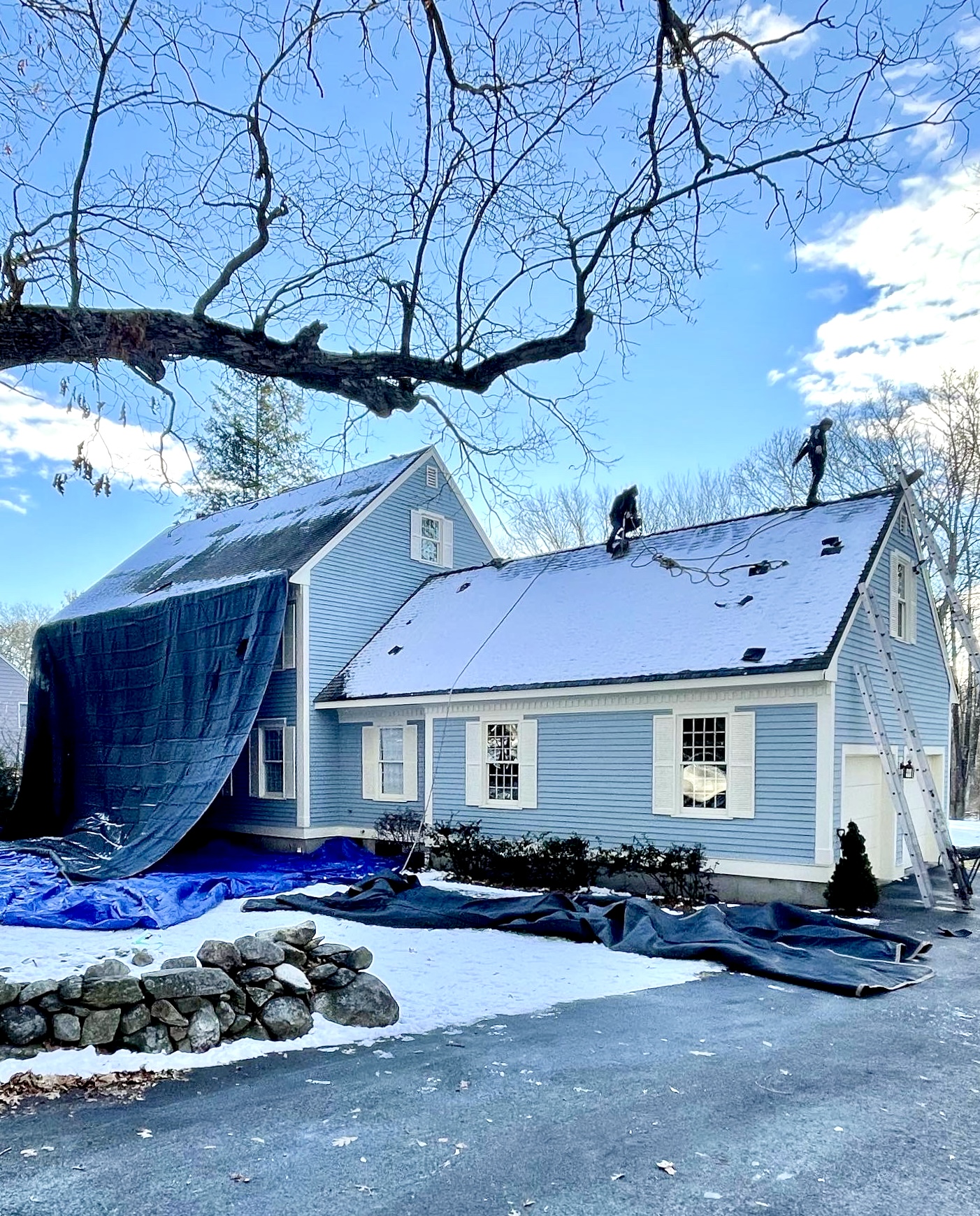
ice dam prevention in massachusetts: what actually works
An ice dam is a ridge of ice at the edge of the roof that traps meltwater behind it, and the water finds its way under the shingles and into the house. Every winter we get calls about stained ceilings, wet insulation and icicles the size of a person, and most of those houses have the same problem: a warm attic. This guide explains why ice dams form, what prevents them for good, what helps at the margin, what to do when one is already there, and what your insurance will and will not cover.
price your roof in seconds
Answer five quick questions and see a standard, premium and deluxe range. No email needed to see the price.
our achievements








 ★★★★★5/5 · 170+ reviews
 ★★★★★5/5
 ★★★★★5/5
 ★★★★★5/5
 ★★★★★5/5
 ★★★★★5/5
 ★★★★★5/5
keep the roof cold; everything else is a bandage
Ice dams form when heat from the house warms the roof deck, snow melts from underneath, the water runs down to the cold eave and refreezes. The long-term fix is to keep the roof cold: seal the air leaks from the house into the attic, insulate the attic floor to the right depth, and ventilate from the soffits to the ridge. An ice and water membrane at the eaves protects the house when a dam forms anyway, and clean gutters with the right kind of guards keep the eave from icing up first. Roof raking, heat cables and calcium chloride are seasonal measures for a roof that has not been fixed yet, not prevention.
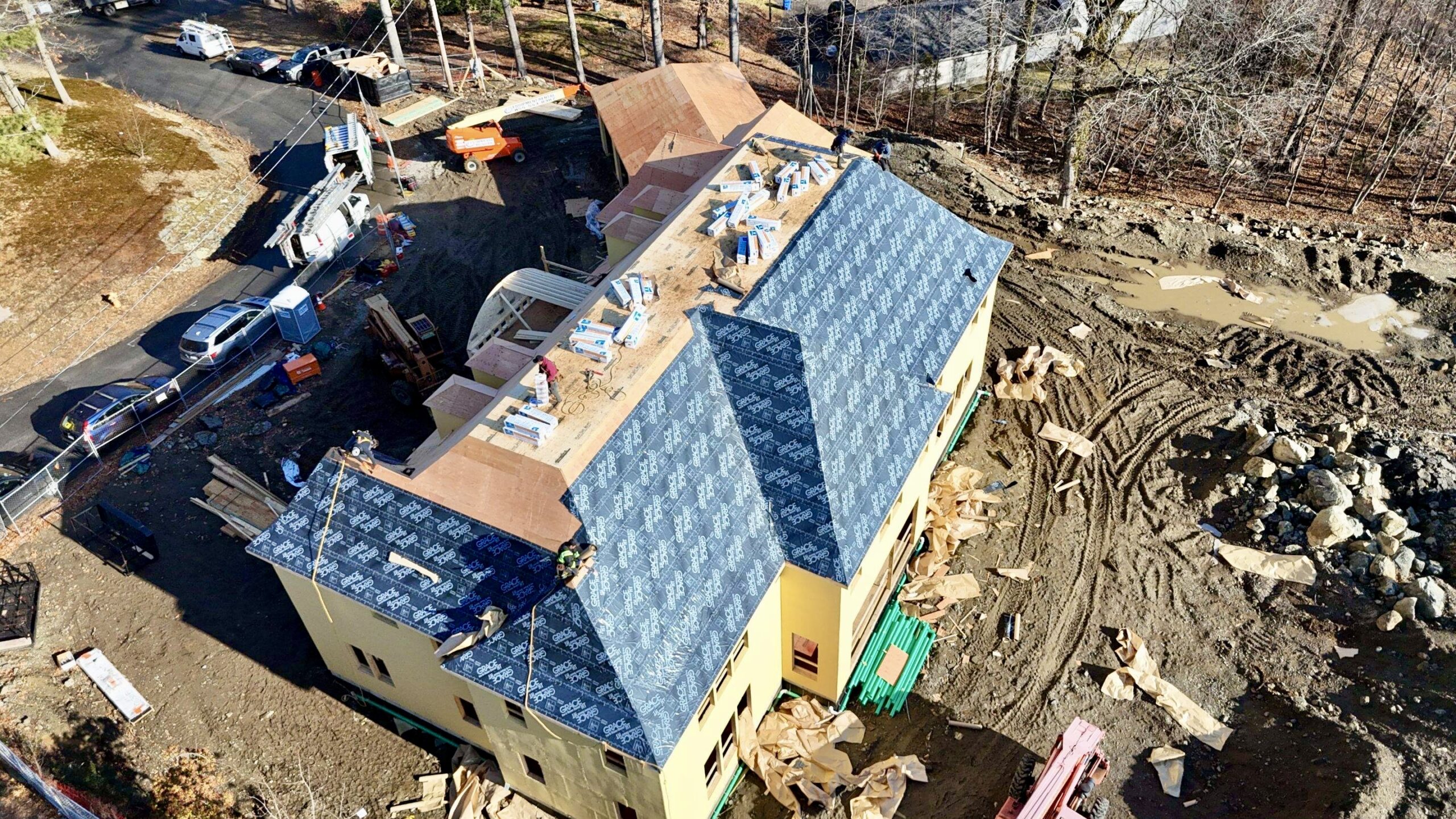

what a new roof costs
Roofing is priced by the square foot installed, and the material sets most of the price. Answer five quick questions for a standard, premium and deluxe range. Every project is quoted after we inspect the roof, and financing is available on every service we offer.
Request your exact quote
Your answers and estimate are already in the message. Add your details and we will schedule a free on-site visit.
the long-term fixes
Why ice dams form, and the five things that stop them. Scroll through.
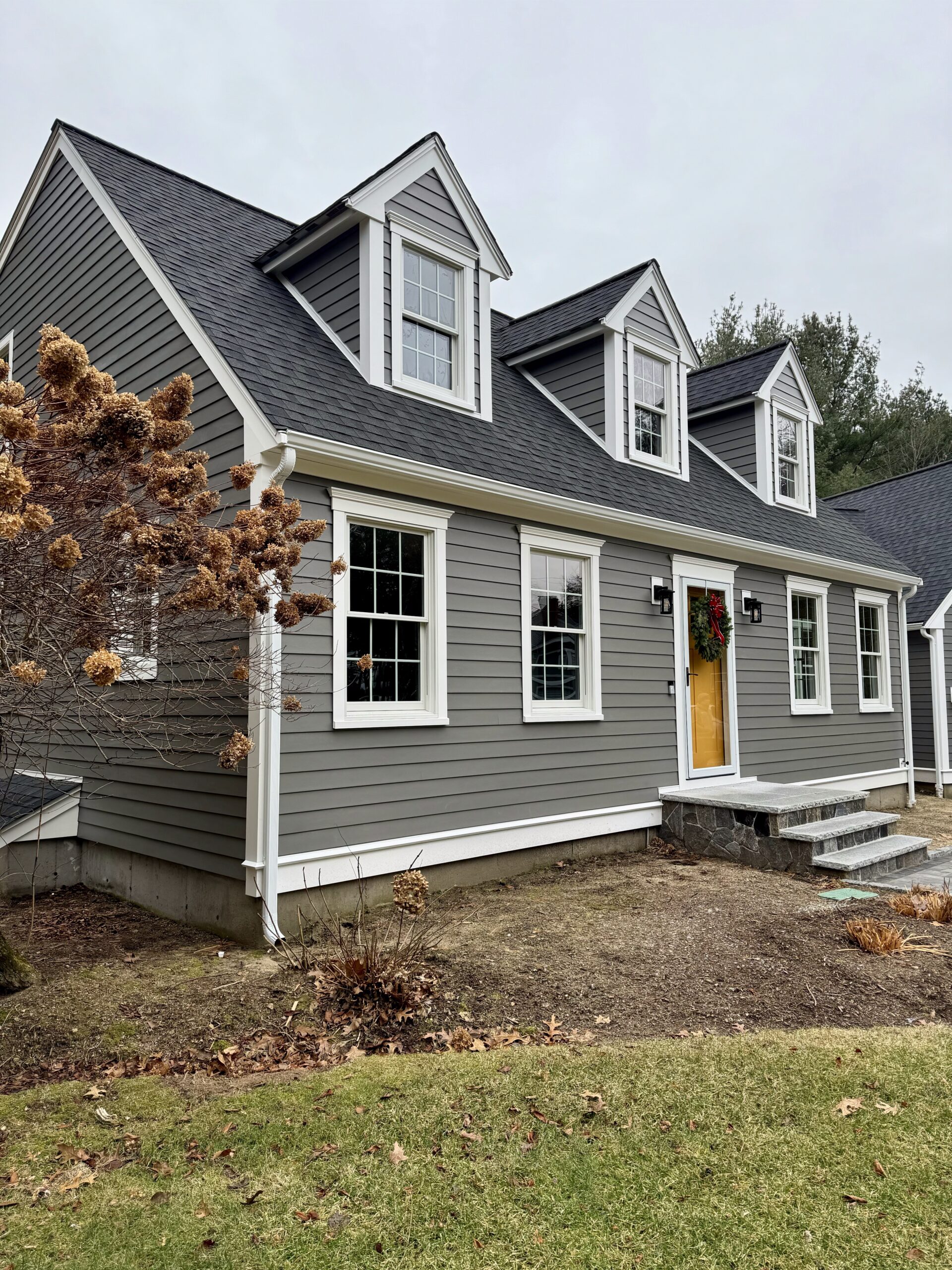
Why ice dams form
Snow on the roof is an insulator. When the attic is warm, the roof deck under the snow rises above freezing and the bottom of the snowpack melts. The water runs down under the snow until it reaches the eave, which hangs past the heated wall and stays cold, and there it freezes. The ice builds into a dam, the water behind it pools, and because shingles are designed to shed water running downhill rather than hold a pond, the water backs up under them and into the soffit, the wall and the ceiling. Icicles along the eave are the visible sign; the damage is inside.
1. Air sealing
Most attic heat does not come through the insulation; it comes through the holes in the ceiling: recessed lights, the attic hatch, plumbing and wiring penetrations, the tops of interior walls, bath and kitchen fans vented into the attic instead of outside. Sealing those gaps is the single most effective step, and it is the one most homes have never had done.
2. Insulation
After air sealing, the attic floor needs enough insulation that the roof deck stays close to outdoor temperature. Many Massachusetts homes have a few inches of old fiberglass; current practice for this climate is a depth that reaches roughly R-49 to R-60. Insulation without air sealing is a blanket with holes in it.
3. Ventilation
Continuous intake at the soffits and exhaust at the ridge move outdoor air across the underside of the roof deck and carry away the heat that does get through. Baffles keep the insulation from blocking the soffit vents. A roof with no soffit intake, common on older capes, cannot ventilate no matter how many ridge or gable vents it has. Cathedral ceilings and finished attics are the hard cases, solved with a vented roof assembly or a hot-roof design, and they are where heat cables earn their keep.
4. Ice and water membrane
A self-adhering membrane under the shingles at the eaves, from the edge to at least 24 inches inside the exterior wall line, which on a typical New England overhang means two courses, about 6 feet up the roof, and in valleys and around penetrations. It does not prevent the dam, but it keeps the water out of the house when one forms. Massachusetts requires it on every re-roof, and it is the main reason a tear-off is worth it on an older roof. Covering the entire deck is sometimes offered as an upgrade; it is not needed on a ventilated roof and can trap moisture in the deck, so we use it on low-slope roofs and ice-prone eaves, not everywhere. See our roof permit guide.
5. Clean gutters and the right guards
A gutter full of leaves freezes solid in the first cold snap and gives the ice dam a head start. Gutters do not cause ice dams, and guards do not either, but the type of guard matters: reverse-curve and solid-cover guards shed meltwater over the front edge where it freezes into icicles and a shelf of ice, which makes the dam worse. Open or micro-mesh guards keep leaves out and let water drop into the gutter, which is the kind we install. See how often gutters should be cleaned in New England.
seasonal measures, and what not to do
Roof raking: pulling the first three or four feet of snow off the eave after a storm removes the fuel for the dam. It works, and it is work. Heat cables: self-regulating cables along the eave and in the downspouts melt channels through the ice; they treat the symptom, cost electricity all winter, can shorten shingle life, and stop keeping up below roughly 20 to 25 degrees. We recommend them only on roofs where the attic cannot be fixed, and only the self-regulating type. Calcium chloride: a nylon stocking filled with calcium chloride, laid across the dam so it melts a channel, is an accepted emergency measure. Rock salt is not; it corrodes gutters and flashing, damages shingles and kills the plants below. Metal roofing: snow slides off a smooth metal surface before it can dam; on a new roof this is a real option, see our metal roofing page. And never chip at ice with a hammer, a shovel or an ice pick, use a torch, or pressure-wash the roof: you will break shingles, tear the membrane and void the warranty.
When an ice dam has already formed
If you see icicles along the eave and a stain on a ceiling or wall below, call before the next thaw. We come out, find where the water is entering, clear the eave and open a channel so the meltwater can drain, and check the insulation that got wet. If the dam has to be removed whole, the right method is low-pressure steam, which cuts the ice without touching the shingles; a hot-water pressure washer looks similar and strips granules, and we will tell you which is called for. Then fix the attic, because the dam will be back next winter.
Insurance, and who is responsible
Most homeowner policies cover the sudden damage an ice dam causes inside the house, the ceiling, the walls, the floors, and do not cover removing the dam itself or any long-standing rot and mold behind it. Document the damage with photos before anything is repaired. A roofer is not responsible for ice dams on a roof they installed; the dam is caused by heat loss from the house. The exception is a roof installed without the required ice barrier, which is a code violation, and it is one of the things an inspector looks for.
a roof built to keep the water out
Asphalt shingles
With the ice barrier run past the minimum and balanced ventilation
- Standard
- $7.20
- Premium
- $8.90
- Deluxe
- $9.30
Rubber (EPDM)
Flat and low-slope roofs, full-coverage membrane
- Standard
- $14.40
- Premium
- $17.10
- Deluxe
- $18.90
Metal
Standing seam; sheds snow before it can dam
- Standard
- $17.40
- Premium
- $19.80
- Deluxe
- $21.10
Cedar shingles
Natural wood, classic New England look
- Standard
- $18.60
- Premium
- $21.30
- Deluxe
- $23.50
How Plum ProExteriors helps
We install roofs with the ice barrier run farther up than the minimum, continuous soffit and ridge ventilation, and gutters sized and guarded for the roof with guards that do not make ice worse. On an estimate we look in the attic, because the roof cannot be judged from the driveway. See our roof replacement cost guide and our gutter services. The calculator above gives a planning range; the free estimate turns it into a measured quote. Financing is available on every project.
how plum proexteriors looks at an ice dam problem
We start in the attic, not on the roof: where the warm air is getting in, how deep the insulation is, whether the soffits can breathe. Then the roof: the ice barrier, the ventilation, the gutters and the guards. You get a written plan that separates what stops the dam from what keeps the water out when one forms, and a quote for the roof and gutter work. Financing is available.


what our clients say
The owner is on site for every project, and when the job is done he asks every client the same question on camera: what do you think? These are their answers, at their own homes.
 Tap to play
 Tap to play
 Tap to play
 Tap to play
 Tap to play
 Tap to play
 Tap to play
 Tap to play
 Tap to play
recent roofing and gutter projects
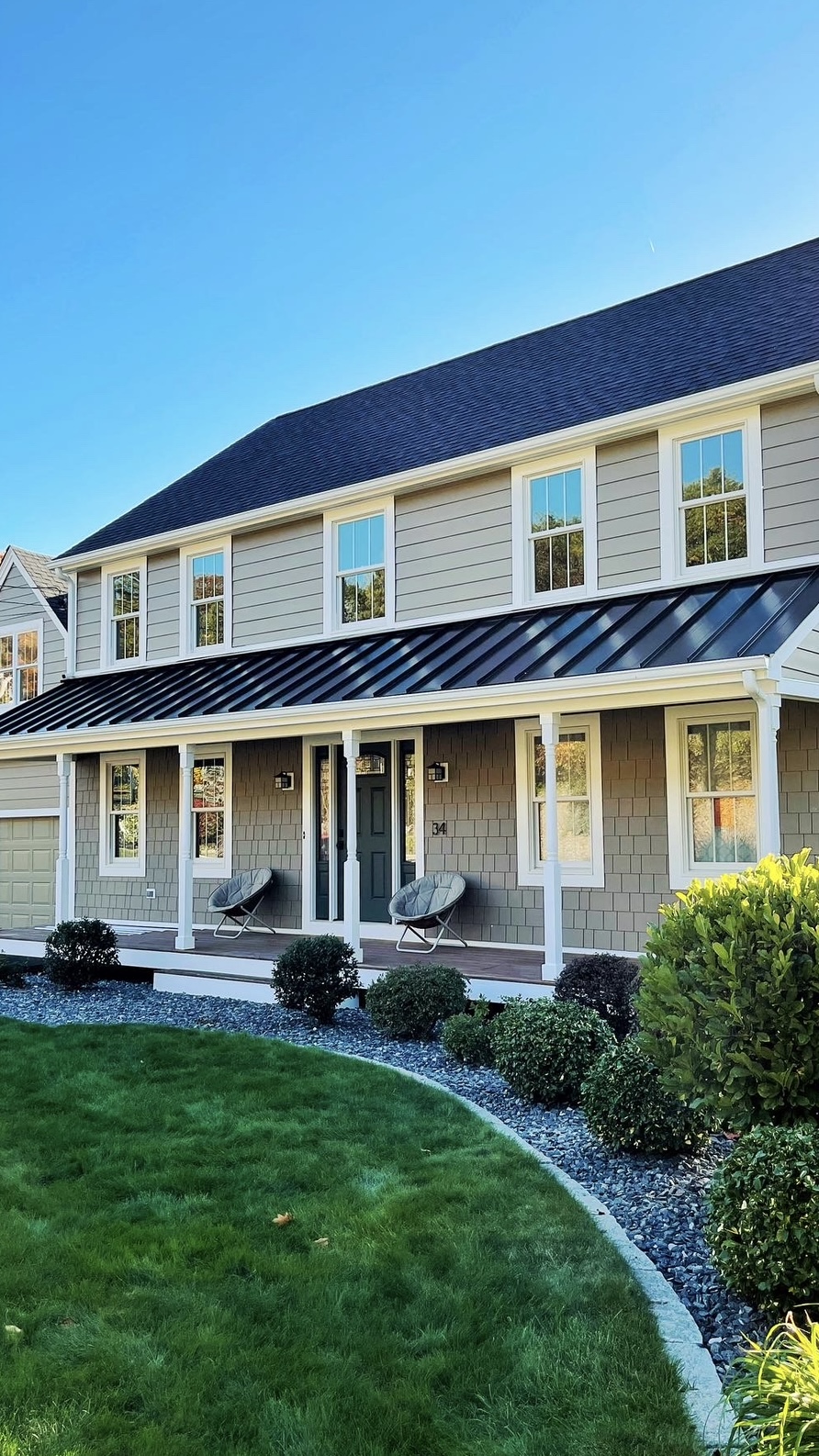
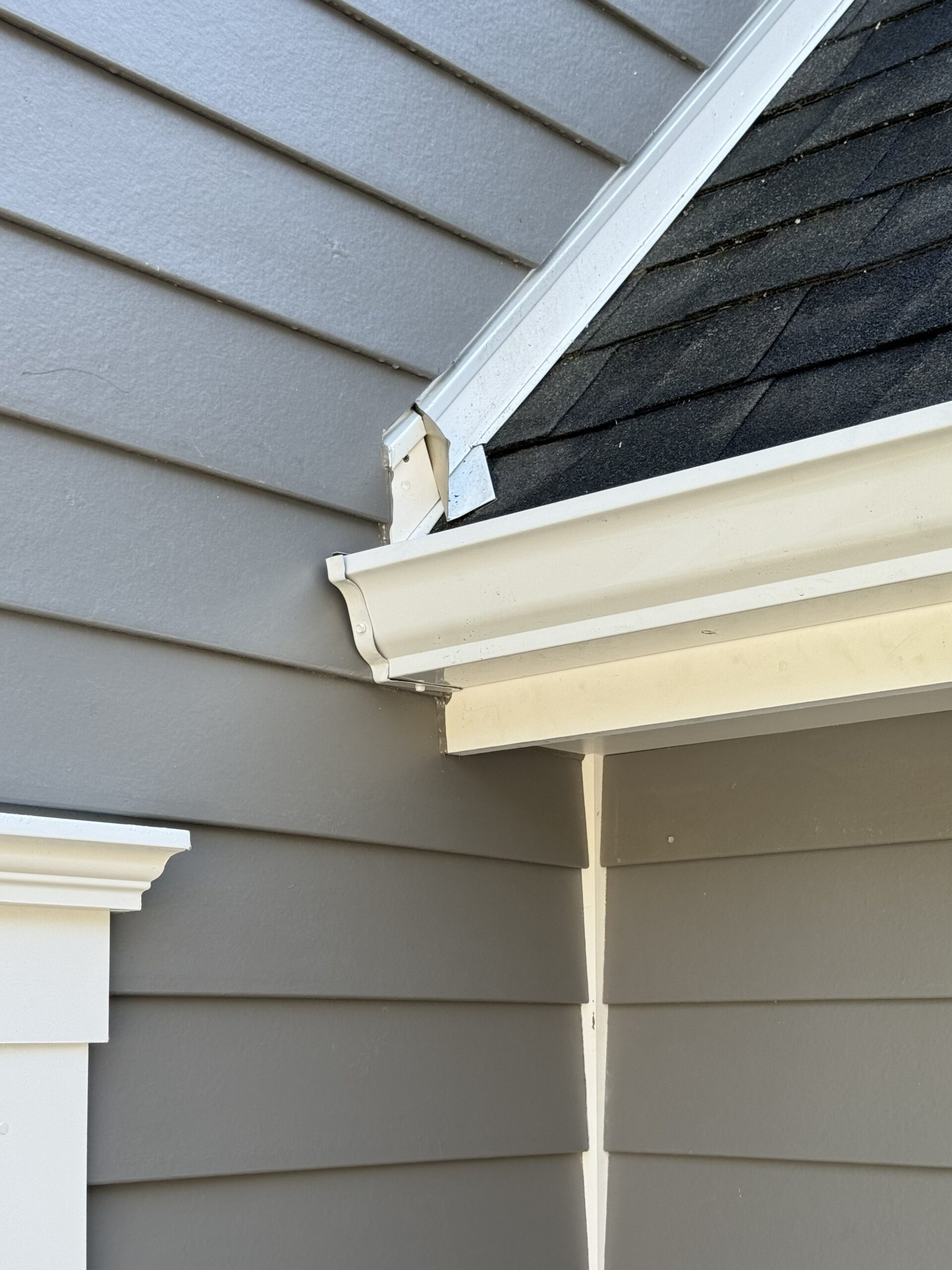
more on roofing and gutters
frequently asked questions
What causes ice dams?
A warm attic. Heat from the house melts the snow from underneath, the water refreezes at the cold eave, and the ice traps the next melt behind it.
Will a new roof stop ice dams?
A new roof with an ice barrier keeps the water out of the house, and proper ventilation helps keep the deck cold. But the dam forms because of heat loss, so air sealing and insulation are the real prevention.
Do gutters or gutter guards cause ice dams?
No, but a clogged gutter gives the dam a place to start, and solid-cover or reverse-curve guards can make the ice at the eave worse. Clean gutters with open or micro-mesh guards help.
Are heat cables a good idea?
As a last resort on roofs where the attic cannot be fixed. Self-regulating only; they treat the symptom, cost electricity all winter and lose ground below about 20 degrees.
Can I put salt on an ice dam?
Calcium chloride in a stocking, laid across the dam, is an accepted emergency measure. Rock salt damages the roof and the plants below and should never go on a roof.
Is ice and water shield required?
Yes, on every re-roof in Massachusetts, at the eaves to at least 24 inches inside the exterior wall line, which is usually two courses, and in valleys and around penetrations.
Does homeowners insurance cover ice dam damage?
Usually the interior damage, yes. Removal of the dam and long-term rot or mold, usually no. Check the policy and photograph everything.
Is my roofer responsible for the ice dam?
No, unless the roof was installed without the required ice barrier. Ice dams come from heat loss in the house, not from the shingles.
Can you help with an ice dam that is already leaking?
Yes. We come out, find the entry point, open a channel so the water drains, and plan the repair. If the dam has to come off whole, low-pressure steam is the only safe method; never chip it, pressure-wash it or rock-salt it.
book a free roof and gutter estimate
Call us or send the estimate form. We will look at the roof, the gutters and the attic and tell you what will actually stop the ice.
Call (508) 266-5411 Send the estimate form