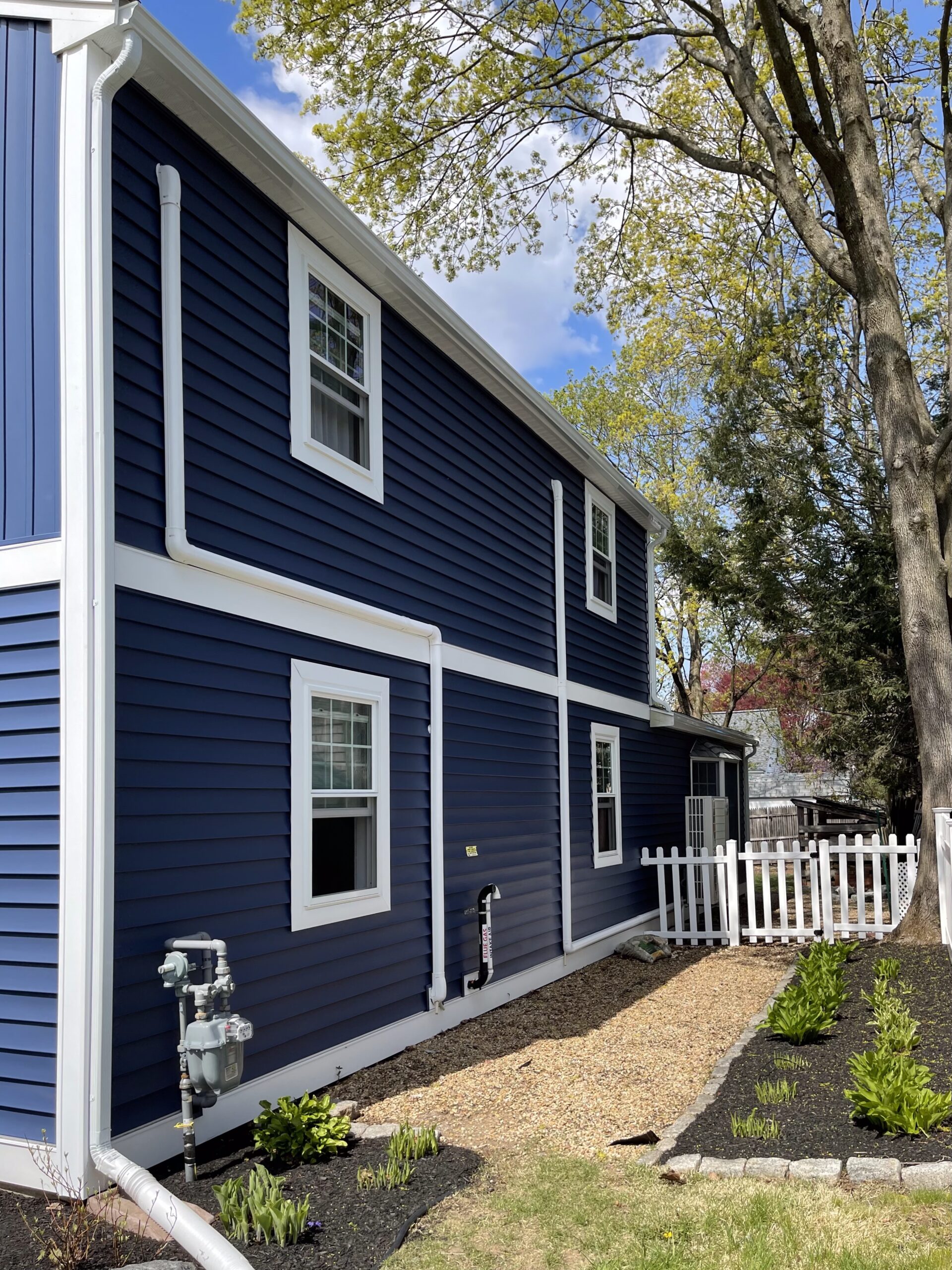
how many downspouts do i need?
Gutters only collect water. Downspouts are what get it off the roof and away from the house. Too few, or downspouts in the wrong places, and even new gutters will overflow at the corners and dump water against your foundation. Here is how to work out how many your home needs, how big they should be and where they should go.
price your gutters in seconds
Answer four quick questions and see a standard, premium and deluxe range. No email needed to see the price.
our achievements









 ★★★★★5/5 · 170+ reviews
 ★★★★★5/5
 ★★★★★5/5
 ★★★★★5/5
 ★★★★★5/5
 ★★★★★5/5
 ★★★★★5/5
one downspout for every 30 to 40 feet
As a rule of thumb, plan on one downspout for every 20 to 40 feet of gutter, and at least one on every separate gutter run. Runs longer than about 40 feet usually need a downspout at each end or one in the middle, with the gutter pitched toward it.
Large or steep roof areas need more downspouts, or larger 3x4-inch downspouts instead of the standard 2x3-inch size. Each downspout should discharge water at least 4 to 6 feet from the foundation.
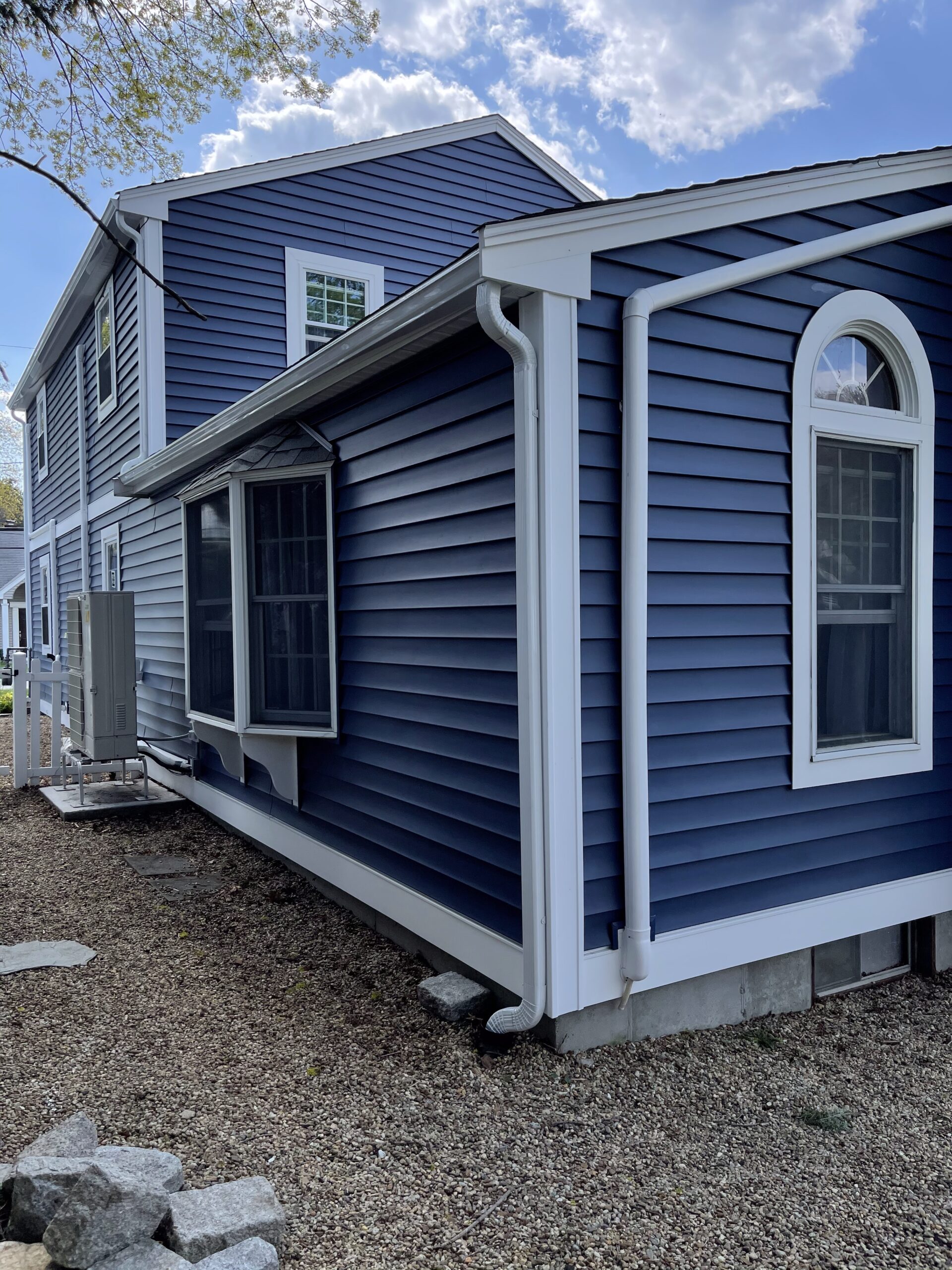

what new gutters cost
Gutter pricing is built from the length of your roof edge, the material, the profile and whether you add guards. Answer four quick questions for a standard, premium and deluxe range. Every project is quoted after we measure the house, and financing is available on every service we offer.
Request your exact quote
Your answers and estimate are already in the message. Add your details and we will schedule a free on-site visit.
why the rules of thumb differ
You will see advice ranging from a downspout every 20 feet to one every 40 feet. Both can be right, because the true limit is not the length of the gutter. It is how much water drains into it. A 30-foot gutter under a small, low-slope porch roof carries far less water than a 30-foot gutter under a large, steep main roof with a valley emptying into it. The spacing rule is a starting point, and the roof area decides the final count.
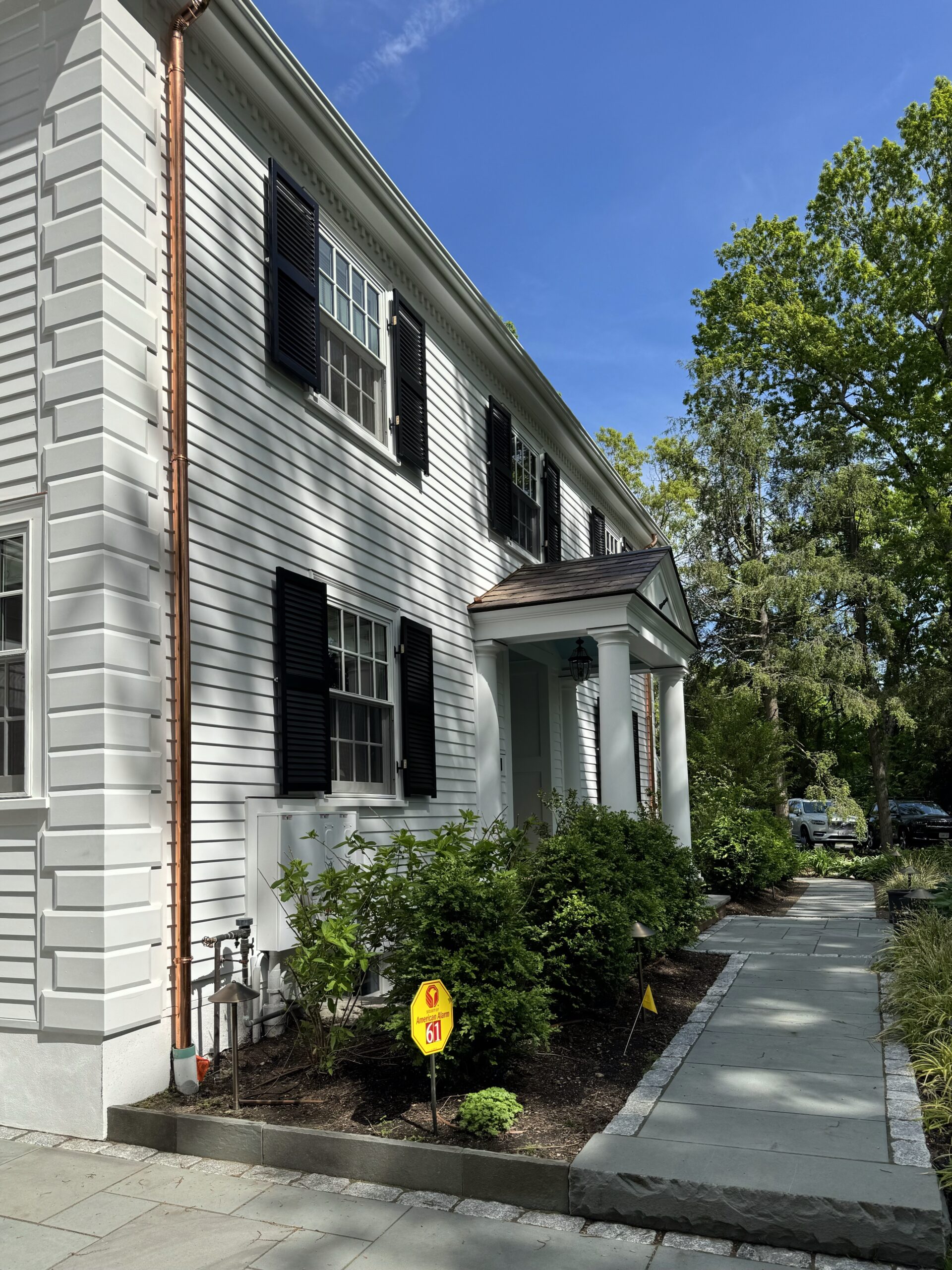
how to calculate the number of downspouts
Measure each gutter run
Walk the house and note every separate stretch of gutter and its length. Every run needs at least one downspout.
Look at the roof above each run
Estimate how much roof surface drains into each run, and note steep pitches and valleys. Those are the sections that need more drainage.
Apply the spacing and size
Start with one downspout per 20 to 40 feet, using the shorter spacing for large or steep roof areas. A larger 3x4-inch downspout drains substantially more than a 2x3-inch one, so upsizing can replace an extra downspout where placement is limited. Professional installers use sizing tables based on roof area and local rainfall intensity, such as those published by SMACNA, to confirm the count.
How Long Can a Gutter Run Be with One Downspout?
Around 30 to 40 feet is the practical limit for one downspout at one end of a standard 5-inch gutter. Beyond that, the gutter has to be pitched over too long a distance, which makes the drop visible along the fascia, and water backs up during heavy rain. For longer runs, add a downspout at the other end or pitch both halves toward a downspout in the middle.
Downspout Sizes: 2x3 vs 3x4
Standard residential downspouts are 2x3 inches and pair with 5-inch gutters. 3x4-inch downspouts carry much more water and are standard on 6-inch gutters. They are also a good upgrade on 5-inch gutters at valleys or other high-flow spots, and they clog less often with leaves. Our guide to 5-inch vs 6-inch gutters explains when the bigger system makes sense.
where downspouts should go
- At the ends of runs and at corners, where the gutter can be pitched toward them
- Near roof valleys, which concentrate water at one point on the gutter
- Where the ground slopes away from the house, so water keeps moving
- Away from walkways, steps and driveways, where discharged water can freeze in winter
- Not onto a lower roof without a splash guard or diverter, which can wear shingles and overload the lower gutter
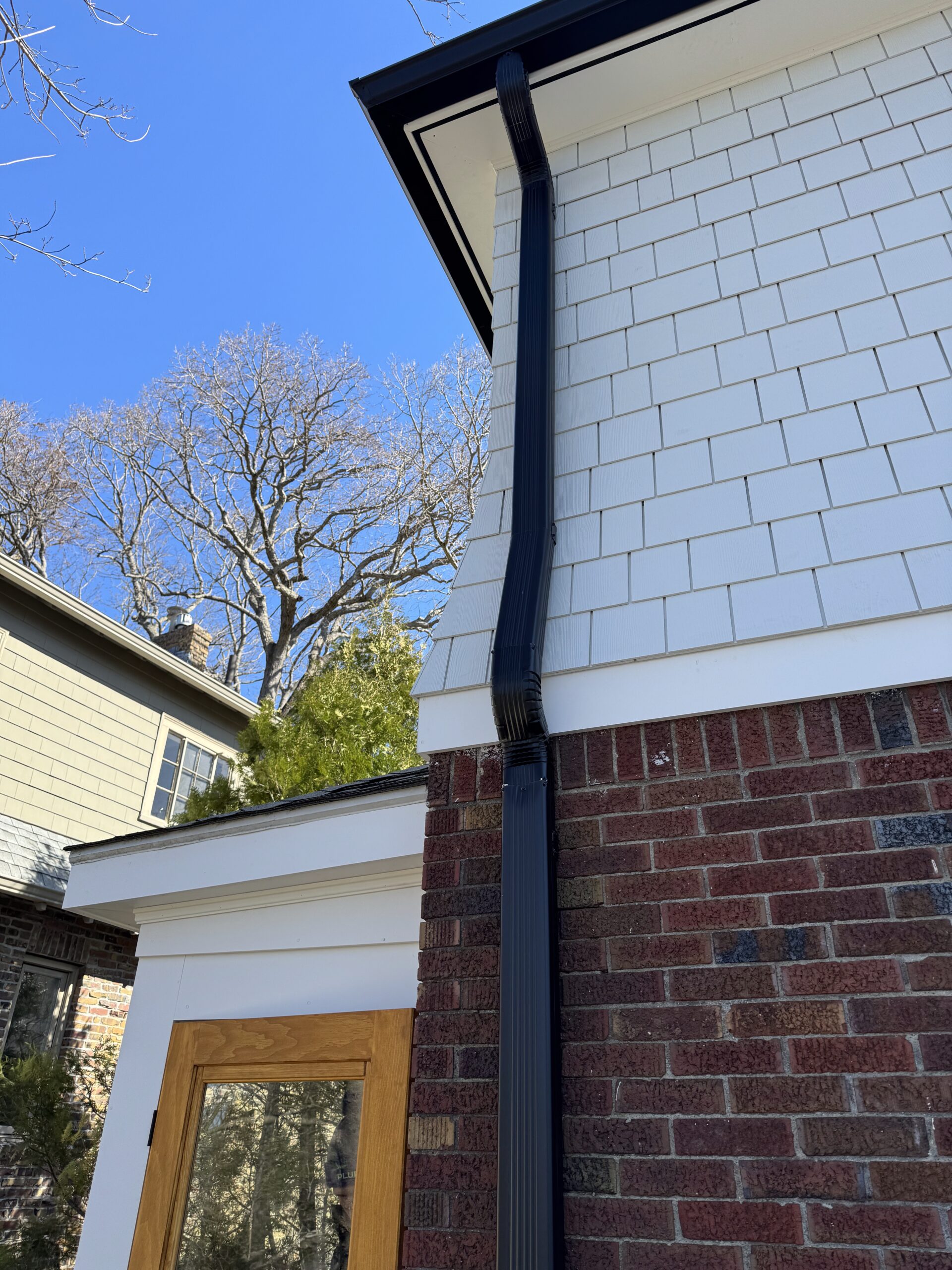
How Far Should Downspouts Drain from the House?
At least 4 to 6 feet, and farther where the ground is flat or slopes toward the house. Extensions, splash blocks or an underground drain line carry the water out. Water dumped at the base of a wall soaks the soil against the foundation, which leads to wet basements and, over time, foundation damage. Our article on seamless gutters and foundation protection explains why.
Can You Have Too Many Downspouts?
Functionally, more downspouts rarely hurt drainage. The downsides are appearance, cost and more places to maintain and route water away from the house. The goal is enough downspouts in the right places, not the most possible.
downspouts in a new england winter
In Massachusetts, downspouts also have to handle snowmelt and ice. A frozen or clogged downspout backs water up into the gutter, where it can freeze and add weight at the roof edge. Larger downspouts, leaf guards to keep debris out and extensions that do not drain across walkways all help. See how new gutters protect your home in winter.
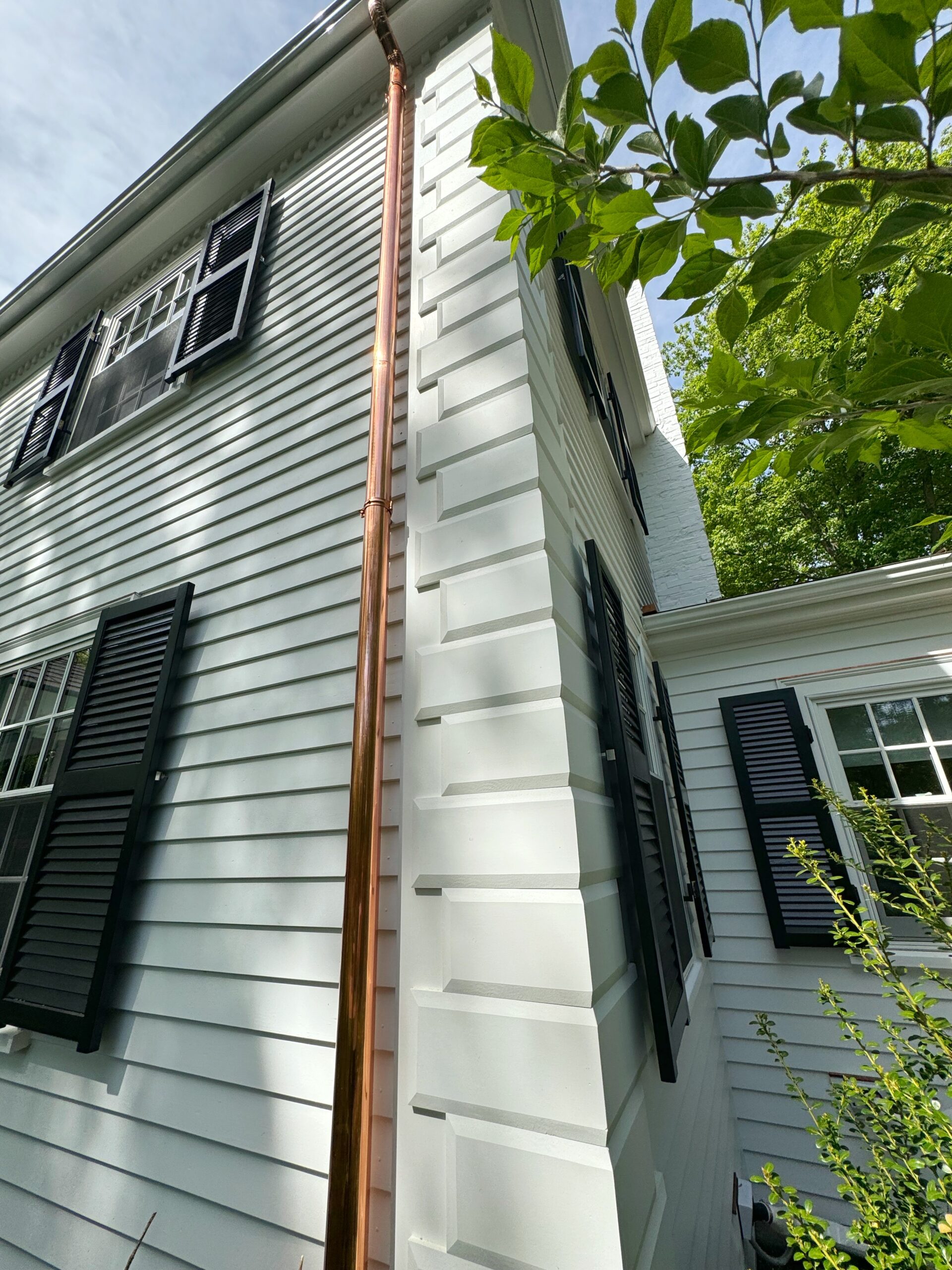
signs you need more downspouts
- Water pours over the gutter at corners or valleys during heavy rain, even when the gutters are clean
- Standing water stays in the gutter long after the rain stops
- Erosion, splash marks or pooling at one spot along the foundation
- Ice builds up repeatedly at the same section of gutter
frequently asked questions
How many feet of gutter per downspout?
Generally 20 to 40 feet, with shorter spacing for large or steep roof areas and longer spacing for small, low-slope roofs.
Do I need a downspout on every gutter run?
Yes. Every separate run needs at least one downspout, and long runs usually need two.
Can I add a downspout to my existing gutters?
Usually, yes. An outlet is cut into the gutter, and the run is re-pitched if needed. If the gutters are old, sectional or sagging, it may be time to replace the system.
Do downspouts need to go underground?
No, but underground drain lines are a tidy way to carry water well away from the house where there is no room for long extensions. They need a clear outlet and should be kept free of debris.
get your drainage planned right
Plum ProExteriors sizes gutters and plans downspouts for every roof we work on. Call or send the estimate form for a free on-site estimate. See our gutter installation services.
Call (508) 266-5411 Send the estimate form